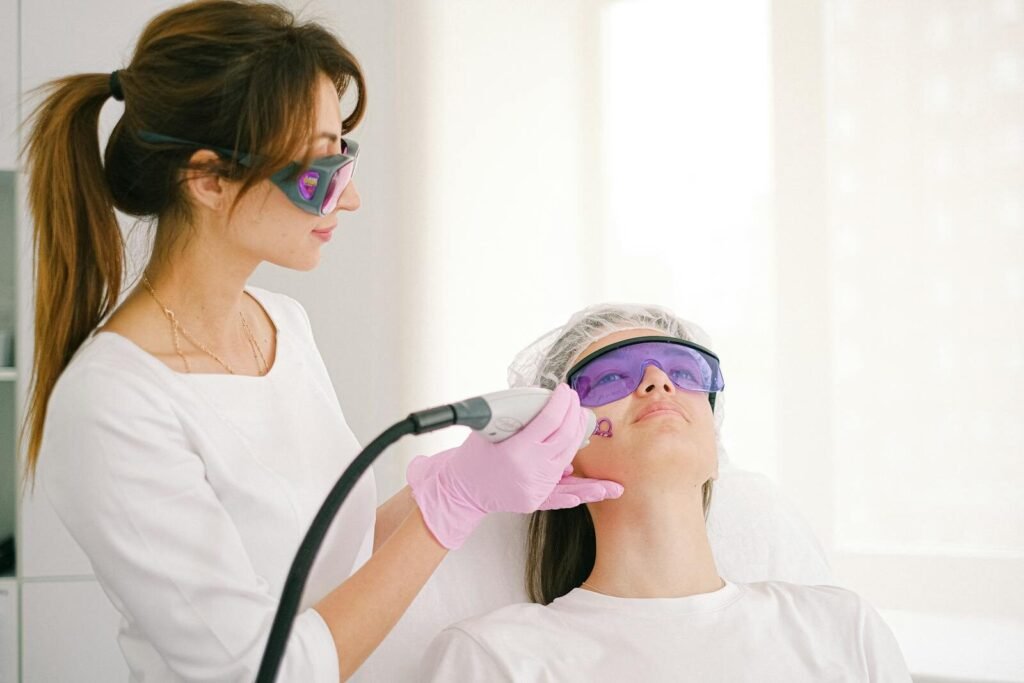








For many patients, pigmentation treatment feels like an exercise in frustration. Spots fade after a course of treatment, only to return weeks or months later — sometimes darker, sometimes in new locations. This cycle is dispiriting, and it often leads patients to conclude that nothing will ever work.
In most cases, that conclusion is incorrect. The issue is rarely that treatment has failed. The issue is that the pigmentation was never properly assessed in the first place.
Not All Pigmentation Is the Same
This is the most important point in understanding why pigmentation recurs: the term "pigmentation" describes a group of clinically distinct conditions that look similar on the skin surface but behave very differently beneath it.
The most significant distinction is between epidermal, dermal, and mixed pigmentation:
Epidermal pigmentation sits in the upper layers of the skin. Examples include freckles, solar lentigines (commonly called sun spots), and superficial post-inflammatory hyperpigmentation. This category generally responds well to topical brightening agents — including formulations combining active brighteners such as tranexamic acid and kojic acid, as found in our Plasmabright TX-K — and certain light-based therapies, particularly when identified early and treated appropriately.
Dermal pigmentation is deposited deeper, in the dermis. Conditions such as Hori's naevus — a form of acquired bilateral pigmentation common in Asian women — and deep-layer melasma fall here. This type is far less accessible to topical treatment and requires laser modalities capable of safely reaching deeper tissue layers.
Mixed pigmentation — most commonly seen in melasma — involves both epidermal and dermal components simultaneously. This is the category most associated with recurrence, and the one most likely to worsen if approached incorrectly.
There are also reactive pigmentation conditions where redness or vascularity is the primary driver, alongside conditions such as seborrhoeic keratoses and acquired bilateral naevus of Ota-like macules (ABNOM), each with their own appropriate management pathway.
Without knowing which type of pigmentation you have, treatment becomes a guessing game.
Why the Wrong Treatment Can Make Pigmentation Worse
This is where assessment becomes not just important, but essential.
Aggressive laser therapy applied to active melasma, for example, can trigger a paradoxical darkening response. In Asian skin — which produces more melanin and responds more reactively to inflammation — this risk is particularly pronounced. Post-inflammatory hyperpigmentation (PIH) resulting from overly aggressive treatment is one of the most common reasons patients arrive at our clinic with pigmentation that has become more complex and more difficult to address than when they first sought help.
The Fitzpatrick skin type classification — which ranges from Type I (the fairest) to Type VI (the deepest) — gives clinicians a structured framework for predicting skin reactivity and calibrating treatment accordingly. Singapore's predominantly Asian patient population clusters around Fitzpatrick Types III to V: skin that requires a more careful, measured approach than protocols designed for lighter skin types.
A proper assessment identifies these risk factors before any treatment begins.
What a Clinical Assessment Actually Involves
A thorough pigmentation assessment goes beyond examining what the skin looks like. It considers several interconnected factors.
Type and depth of pigmentation. Diagnostic tools including Wood's lamp examination and digital skin analysis help clinicians visualise pigmentation depth. Epidermal pigmentation typically fluoresces under UV illumination, while dermal pigmentation does not — a distinction that directly informs which treatment modalities are appropriate and at what parameters.
Skin type and reactivity. Fitzpatrick skin typing guides treatment intensity. Skin with a personal or family history of post-inflammatory hyperpigmentation requires a fundamentally different protocol than skin with no prior inflammatory response.
Triggering factors. Pigmentation is not simply a cosmetic concern — it often has identifiable underlying triggers. For melasma, these commonly include hormonal fluctuation (pregnancy, oral contraceptives, and hormonal therapy are the most frequent drivers), UV exposure, and heat. For post-inflammatory hyperpigmentation, the trigger is typically prior acne, injury, or an inflammatory skin condition. Identifying and, where clinically possible, addressing the trigger is fundamental to any long-term management strategy.
Medical history. Certain medications — including some antibiotics, anti-epileptic agents, and antimalarial drugs — are photosensitising and can cause or exacerbate pigmentation. A detailed history helps clarify whether medication review (in coordination with the patient's other treating physicians) is relevant.
Sun protection habits. Even the most clinically appropriate treatment will be compromised if the patient returns to unprotected UV exposure. Assessment includes a frank conversation about the patient's current sun protection practices and whether these need to change.
Only when these factors are understood together can a rational, individualised management plan be developed.
Why Pigmentation Keeps Coming Back
Recurrent pigmentation almost always has an explanation. The most common reasons include:
Sensitised melanocytes. Once triggered — by sun, heat, hormones, or inflammation — pigment-producing cells remain reactive. Even after visible pigmentation has been clinically addressed, the underlying sensitivity persists. This is particularly true of melasma, which is a chronic condition requiring ongoing management rather than a single course of treatment.
The triggering factor was not addressed. If hormonal fluctuation is the primary driver of melasma but no changes are made to the hormonal environment — and no protective strategies are introduced — the condition will continue to recur regardless of how effective short-term treatment was.
Inadequate sun protection. Singapore's year-round UV exposure is one of the most significant environmental challenges for pigmentation patients. Broad-spectrum SPF 50+ applied every morning — including on overcast days and indoors near windows — is not optional. It is the single most important maintenance step in any pigmentation management plan.
Treatment that addressed the visible lesion without managing the mechanism. A one-off treatment addressing an existing sunspot does nothing to prevent new spots forming. Effective pigmentation management requires understanding why pigmentation appeared — not simply where it appeared.
The Importance of Matched Treatment
The treatment landscape for pigmentation now includes multiple laser and light-based modalities, each with different wavelengths, pulse durations, and target tissue profiles. Selecting the appropriate approach requires clinical judgement rather than patient preference or a generic protocol.
Low-fluence laser toning, for instance, works through a different mechanism than Quattro Toning — our picosecond laser treatment — which differs again from broadband light-based treatment. Each has appropriate indications and contraindications. Each requires individual calibration to skin type, pigmentation depth, and current skin condition. In many cases, a combination approach — integrating complementary modalities alongside prescription-grade topical agents — is more appropriate than any single treatment in isolation.
This is precisely why a consultation with an experienced aesthetic physician matters: not to recommend any particular treatment, but to understand the clinical picture well enough to recommend the right one — and to know when a given modality is contraindicated.
Maintenance Is Part of the Plan
Pigmentation management — particularly for conditions such as melasma — is rarely a single course of treatment followed by resolution. It is an ongoing relationship between patient and clinician, with periodic reassessment as hormonal status changes, seasons shift, and the skin evolves over time.
At SW1 Clinic, we counsel patients from the outset: diligent sun protection, appropriate home care, and periodic professional maintenance are the architecture of long-term skin clarity. Treatment responses vary between individuals; your physician will set realistic expectations at your consultation. The frequency and nature of that maintenance will be tailored to the individual — and will be reviewed and adjusted as the skin responds.
Start With a Proper Assessment
If your pigmentation keeps returning, the most productive step is a clinical assessment — not another round of the same treatment that has not delivered lasting improvement.
At SW1 Clinic, our physicians assess pigmentation type, depth, trigger history, and individual skin reactivity before recommending any treatment pathway. The goal is not a quick fix, but a management approach that makes clinical sense for your skin — one that accounts for both what is visible and what is driving it beneath the surface.
Book a consultation at SW1 Clinic
Understand what your pigmentation actually is, and what a personalised management plan looks like.
Follow Dr Low Chai Ling, Founder and Medical Director of SW1 Clinic
LinkedIn · Substack · Instagram · YouTube · TikTok · lowchailing.com
Follow SW1
Instagram: @sw1clinic, @sw1beauty, @sw1spa, @sw1shopsg · Facebook: SW1 Clinic, SW1 Spa · TikTok · YouTube · LinkedIn · Pinterest · Telegram
More from SW1: SW1 Spa blog · SW1 Shop blog