







ChromaLase

ChromaLase Pulsed Dye Laser: The Answer to Red Acne Marks and Rosacea
If you have spent time researching your skin concerns online, particularly around the redness that lingers after a pimple has healed — you may already be familiar with the acronym PIE: Post-Inflammatory Erythema. Unlike the brown discolouration of post-inflammatory hyperpigmentation, PIE is a vascular response. It is not pigment at all. It is the residual dilation of tiny blood vessels that were disrupted by inflammation, and it requires a fundamentally different treatment approach. ChromaLase, SW1 Clinic’s pulsed dye laser, was built for exactly this problem.
PIE vs PIH: Getting the Diagnosis Right
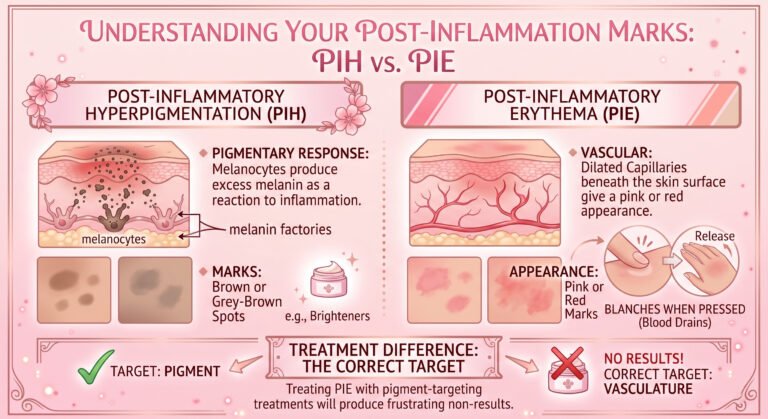
The distinction between Post-Inflammatory Erythema (PIE) and Post-Inflammatory Hyperpigmentation (PIH) matters because the treatments are completely different.
• PIH is a pigmentary response: Melanocytes produce excess melanin as a reaction to inflammation, resulting in brown or grey-brown marks.
• PIE is vascular: Dilated capillaries beneath the skin surface give a pink or red appearance that blanches when pressed. Treating PIE with pigment-targeting treatments will produce frustrating non-results. The correct target is the vasculature itself.
ChromaLase, as a pulsed dye laser, operates on a haemoglobin-selective principle: the laser wavelength is specifically absorbed by the red pigment (haemoglobin) in blood vessels, generating heat that causes the vessel to collapse and be reabsorbed by the body. The skin’s tone evening effect is the visible result of this “vanish” — the targeted vessels are no longer there to create the redness. “PIE can be incredibly demoralising for patients who have finally got their acne under control,” says Dr Low Chai Ling. “ChromaLase gives them a way to close the chapter, not just manage it.”
Rosacea and Facial Spider Veins: The Broader Vascular Picture
ChromaLase’s haemoglobin-targeted mechanism makes it the treatment of choice for a range of vascular skin concerns beyond PIE. Rosacea, a chronic inflammatory condition characterised by persistent facial redness, visible blood vessels, and often papules that can mimic acne — responds very well to pulsed dye laser, with reductions in both the vascular component and the frequency of flare-ups.
Facial telangiectasias — the small, visible spider veins that often appear on the nose and cheeks, are also effectively addressed. The vessels are selectively heated and collapsed, with minimal impact on the surrounding skin. “The specificity of pulsed dye laser is what makes it so well-suited to vascular work,” says Dr Chua. “We can target a vessel and leave the skin a millimetre away untouched.”
Not sure which treatment is right for you? Take the SW1 Quick Skin Quiz — a 2-minute skin diagnostic designed by our doctors.
Micro-Pulse Technology: Effective Without the Bruising
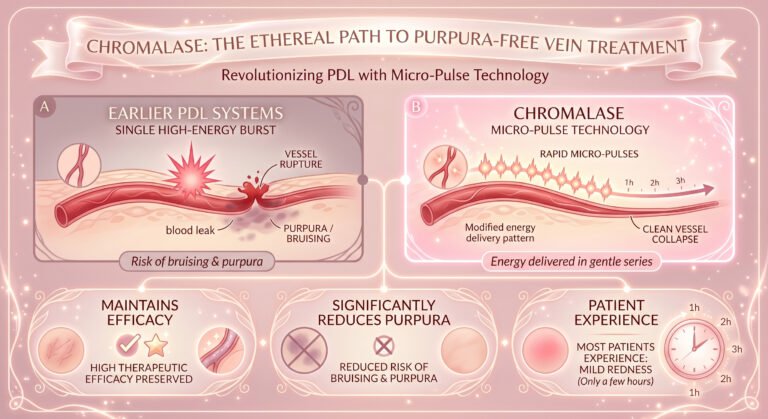
Earlier generations of pulsed dye lasers were effective but came with a frequently reported downside: purpura, or bruising. The laser energy caused the targeted vessels to rupture rather than simply thermally collapse, resulting in bruise-like discolouration that could persist for a week or more. For many patients, the prospect of visible bruising was enough to discourage them from pursuing treatment.
ChromaLase employs micro-pulse technology — a modified energy delivery pattern that maintains therapeutic efficacy while significantly reducing the risk of purpura. Energy is delivered in a rapid series of micro-pulses rather than a single high-energy burst, allowing the vessel to heat and collapse cleanly without the rupture that caused bruising in earlier PDL systems. Most patients experience only mild redness in the treatment area for a few hours following the session. “Modern pulsed dye laser really is a different experience to what patients might have heard about from a decade ago,” notes Dr Lee.
FDA-Approved, Broad Application: Beyond Acne and Rosacea
ChromaLase carries FDA approval for a range of vascular and pigmentary conditions, including port wine stains, haemangiomas, and other vascular birthmarks. This regulatory standing reflects the depth of clinical evidence supporting its safety and efficacy — important context for patients assessing their options.
For acne specifically, ChromaLase addresses the inflammatory and vascular component: the redness, the PIE, the persistent flushing — that other acne treatments may not fully resolve. It is frequently paired with I-Clear, which targets the bacterial cause of acne, creating a combined programme that addresses both the active breakouts and the vascular aftermath they leave behind. LED Red Photomodulation is another natural complement, supporting vascular health and soothing the skin in the days following ChromaLase treatment.
What to Expect: The Treatment and Recovery
A ChromaLase session typically takes between fifteen and thirty minutes depending on the treatment area. The sensation during treatment varies by patient and energy setting. Most describe a brief elastic snap at the skin surface with each pulse, lasting a fraction of a second. A topical anaesthetic may be applied prior to the session for patients with lower tolerance.
Post-treatment, the skin typically appears slightly pink and may feel warm — similar to mild sunburn — for a few hours. In most cases, patients can return to work and social activities the same day. A course of three to five sessions is typically recommended for PIE and rosacea, spaced four to six weeks apart, though individual responses vary. The skin continues to improve in the weeks following each session as the body clears the targeted vessels.
*Clinical results may vary depending on individual skin conditions and baseline health.
FAQS
How do I know if I have PIE or PIH?
The simplest test: press on the red/pink mark and release. If it blanches (turns white) and then returns to pink, it is likely PIE — a vascular response. If it does not blanch significantly, it is more likely PIH — a pigmentary response. A consultation with an SW1 doctor will confirm the diagnosis and recommend the appropriate treatment.
Is ChromaLase safe for sensitive or rosacea-prone skin?
Yes. ChromaLase is specifically indicated for rosacea and is FDA-approved for vascular conditions including sensitive skin presentations. The micro-pulse technology minimises trauma to surrounding tissue, making it well-tolerated even by reactive skin types.
How many sessions are typically needed for PIE?
Most patients see meaningful improvement within two to four sessions spaced four to six weeks apart. Very established or widespread PIE may require additional sessions. Individual response varies based on the extent of vascular involvement and how the skin heals.
Will the redness come back after treatment?
ChromaLase addresses the existing vascular changes — the treated vessels do not return. However, if the underlying cause of redness (rosacea, ongoing acne) is not managed, new vessels can develop over time. A maintenance programme and appropriate skincare can help preserve results.
Can ChromaLase be combined with other treatments in the same visit?
Combination protocols depend on the individual patient and are assessed at consultation. ChromaLase is frequently combined with I-Clear and LED Red in a single visit, which is both time-efficient and clinically effective.
Book a Consultation
Persistent redness, whether from PIE, rosacea, or visible capillaries — can feel like a daily reminder of skin you would rather move past. ChromaLase offers a targeted, evidence-based way to address that redness at its source. The SW1 team would be glad to assess your skin, confirm the nature of your concern, and recommend the right treatment path.