






If there’s one beauty trend that hasn’t let up over the years, it’s the quest for a V-shaped face. What started as a face shape coveted by Korean celebrities has become, for many women in Asia, the defining marker of a youthful profile.
Going under the scalpel is one route. But non-surgical options have grown rapidly, and for most people they are now the more sensible starting point. This guide covers what a V-shaped face actually is, what you can influence yourself, and what a doctor can do.
Why a V-shaped face is sought after
The V-shaped face is slim and elongated, narrowing to a defined chin. It reads as youthful because a smaller lower face accentuates the eyes and cheekbones.
As we age, facial fat descends and skin loses laxity. The result is often described as an inverted triangle of youth: the face broadens at the jaw and softens along the jawline. A V-shaped profile is essentially the reverse of that pattern, which is why it is associated with looking younger rather than simply looking slimmer.
What you can influence yourself
Not every route to a more defined jawline is clinical. Several things are within your control, and they matter more than most people expect.
Manage overall weight. Excess body fat contributes to a rounder face. Facial fat is rarely lost in isolation, so overall weight management usually shows in the face.
Reduce sodium. High sodium causes water retention and facial puffiness. Cutting processed food often produces a visible difference within days.
Stay hydrated. Adequate water supports skin elasticity and reduces the fluid retention that makes faces look puffy in the morning. One to two litres daily is a reasonable target.
Eat for skin health. A diet rich in vegetables, protein and anti-inflammatory foods such as leafy greens and nuts supports both complexion and facial definition. Chronic inflammation contributes to puffiness.
Moderate alcohol and caffeine. Both dehydrate, and both show in the face.
Facial and cardio exercise
Facial exercises, sometimes called face yoga, tone the muscles beneath the skin. Two that target the lower face:
For the jawline: place your hands at the base of your neck, elevate your chin and tilt your head back. Smile while extending your lower jaw and pushing the tip of your tongue to the roof of your mouth. Hold for 30 seconds.
For the cheeks: smile without showing your teeth, then roll your lips outward. Pull the muscles upward at the corners of your lips, place a finger at each corner and press firmly towards the cheekbones for 20 seconds.
Cardiovascular exercise addresses the underlying cause more directly, since facial fullness is often a function of overall body fat. Jogging, cycling and swimming all work. The benefit here is not only cosmetic.
Non-surgical treatments
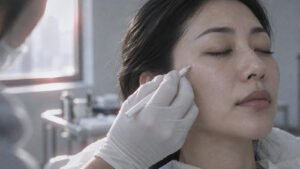
Where lifestyle measures reach their limit, several clinical options can reshape the lower face without surgery.
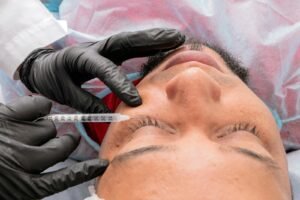
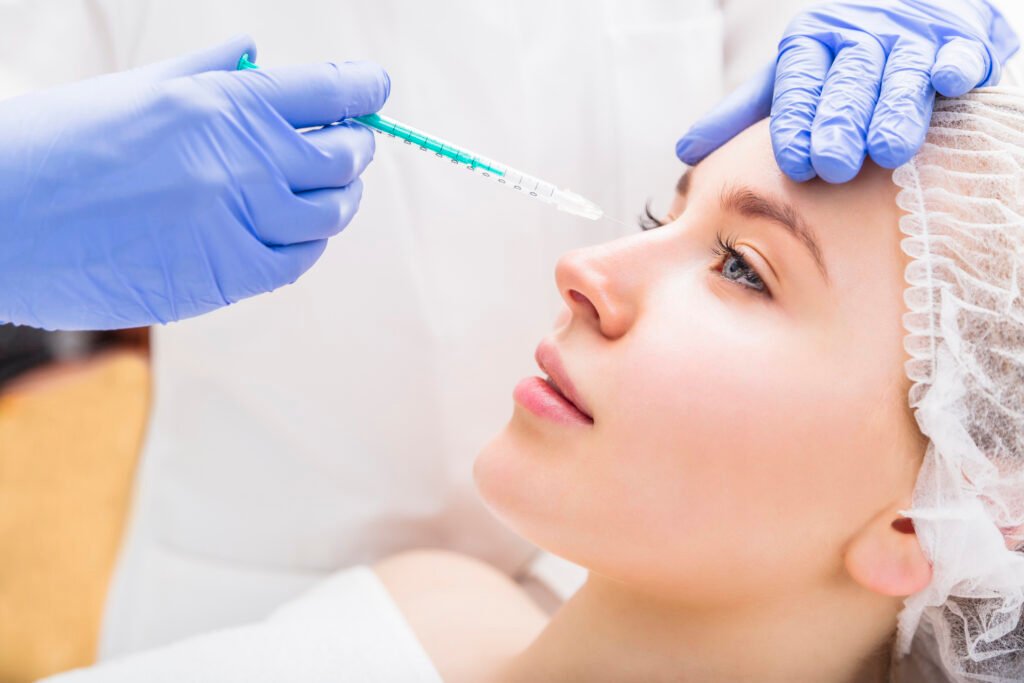
Anti-wrinkle injections to the masseter. The masseter is the chewing muscle at the angle of the jaw. In some people it is naturally bulky, which squares the lower face. Relaxing it reduces that bulk and softens the jaw angle over several weeks.
Fillers to the chin. Where the chin lacks projection, filler placed at the chin creates the point of the V and lengthens the lower face. This is often combined with masseter treatment: one narrows, the other defines.
Ultherapy. A non-invasive, FDA-cleared ultrasound treatment that works in the deep supportive layers of the skin, stimulating collagen and tightening laxity along the jawline. Because it addresses sagging rather than volume or muscle bulk, it suits a different patient again.
The V-Sculpt Facial Program. SW1’s combined programme, pairing injectables with facial treatments to work on jaw width, chin projection and skin laxity together rather than in isolation.
Which of these is appropriate depends on why your lower face reads as wide — muscle, fat, volume loss or laxity are different problems with different answers. That assessment is what a consultation is for.
Non-surgical or surgical?
Surgical jaw reduction remains an option and for some anatomies it is the only one that will work. But it carries the recovery time and risk profile of surgery.
For many patients, a combination of masseter treatment, chin filler and skin tightening achieves a comparable visual result with no downtime, at lower cost, and reversibly. The honest answer is that the right route depends on the starting anatomy, and a doctor should tell you plainly if a non-surgical approach will not get you where you want to go.
Maintaining your results
Post-treatment care determines how long your results last.
Follow the post-procedure instructions. Your doctor will give you a list of things to do and avoid. Following it speeds recovery and reduces the chance of inflammation or side effects.
Keep the area clean and dry. Use a gentle cleanser and avoid harsh ingredients while the skin recovers.
Be gentle. Skip acids and retinols for the period your doctor advises. Use soothing, hydrating products instead.
Eat well and hydrate. Foods rich in vitamins and antioxidants support skin healing from the inside.
Sleep. Seven to nine hours allows the body to engage in tissue repair and lowers cortisol, which supports recovery.
Speak to a doctor
Achieving a more V-shaped profile is rarely a single treatment. It is usually a combination, chosen against your particular anatomy, and it works best when the lifestyle side is addressed alongside it.
To discuss what would suit you, book a consultation with one of our doctors at SW1 Clinic.
Follow Dr Low Chai Ling, Founder and Medical Director of SW1 Clinic
LinkedIn · Substack · Instagram · YouTube · TikTok · lowchailing.com
Follow SW1
Instagram: @sw1clinic, @sw1beauty, @sw1spa, @sw1shopsg · Facebook: SW1 Clinic, SW1 Spa · TikTok · YouTube · LinkedIn · Pinterest · Telegram
More from SW1: SW1 Spa blog · SW1 Shop blog