








By Dr Low Chai Ling
Founder and Medical Director, SW1 Clinic. MBBS, King’s College London; Diploma in Practical Dermatology, Cardiff University.
Almost every week, someone sits in my consultation room and asks me the same question:
“Ultherapy Prime or HIFU—which one is better?”
My mildly irritating answer is: Ultherapy is HIFU.
HIFU is the broad family of focused-ultrasound technologies. Ultherapy Prime is a particular member of that family, with one important distinction: it allows the doctor to visualise the tissue being treated in real time.
But that does not make it automatically right for every face.
Machines do not examine patients. Doctors do—or at least, we should.
The more useful question is not which machine is supposedly the strongest, newest or most fashionable. It is whether focused ultrasound is appropriate for your anatomy, and if so, how it should be used.
What is HIFU?
HIFU stands for high-intensity focused ultrasound.
In aesthetic medicine, focused-ultrasound energy is delivered beneath the skin to create small, controlled points of thermal stimulation at selected depths. This response can lead to collagen contraction and remodelling over time.
The surface of the skin is not surgically cut. The energy is focused within deeper tissue, which is why ultrasound is commonly discussed as a non-invasive option for selected patients with skin laxity.
However, “HIFU” is a category, not a single standardised treatment.
Different devices can vary in:
- Treatment depths
- Energy delivery and consistency
- Transducer design
- Treatment speed
- Whether tissue can be visualised
- Operator controls
- Clinical evidence
- Practitioner training
- Recommended treatment protocols
Two treatments advertised as HIFU are therefore not necessarily equivalent.
It is a little like comparing cars simply because they all have four wheels. Technically correct. Not especially useful.
What is Ultherapy Prime?
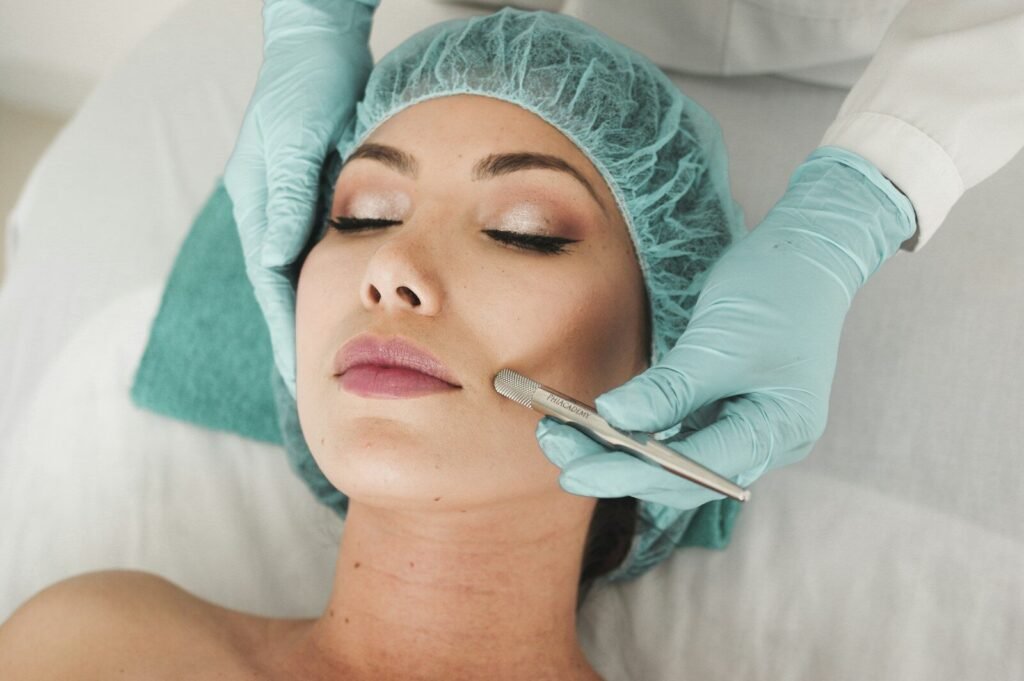
Ultherapy Prime is a focused-ultrasound system used for non-invasive lifting and tightening in appropriately selected patients.
Its defining feature is real-time ultrasound visualisation. This allows the treating doctor to see relevant tissue layers before and during energy delivery.
The visualisation can help the doctor:
- Confirm contact between the transducer and the skin
- Identify relevant tissue depths
- Adjust treatment placement according to anatomy
- Avoid treating by assumption alone
The Ulthera system has received US Food and Drug Administration clearance for specific aesthetic indications, including lifting the eyebrow, lifting lax tissue beneath the chin and on the neck, and improving lines and wrinkles of the décolletage. Regulatory indications may differ between countries.
Visualisation is valuable, but it is not a substitute for judgment. A doctor still has to decide where to treat, where not to treat and whether the patient should be treated at all.
Is Ultherapy Prime simply a stronger HIFU?
Not exactly.
In aesthetics, patients often assume that stronger means better. A stronger coffee may improve my morning. A stronger treatment is not automatically an improvement.
The objective is not to deliver the greatest possible amount of energy. It is to deliver appropriate energy, at an appropriate depth, to the appropriate tissue.
An overly aggressive treatment may create more discomfort and increase the risk of unwanted effects without delivering a proportionately better aesthetic result. A treatment that is too conservative may not create sufficient stimulation.
The skill lies in assessment, calibration and placement—not intensity alone.
How does focused ultrasound work?
Focused ultrasound creates controlled thermal-coagulation points beneath the skin. These points initiate a wound-healing response that may lead to collagen contraction and subsequent remodelling.
Because collagen remodelling is a biological process, improvement develops gradually. It should not be judged by how someone looks immediately after stepping off the treatment bed.
Published systematic reviews suggest that microfocused ultrasound can produce improvement in appropriately selected patients with mild to moderate facial skin laxity. Results vary, study methods are not uniform and longer-term evidence is more limited than short-term evidence.
Focused ultrasound is not a facelift without surgery.
If someone promises you a surgical result without surgery, keep your face and leave the room.
How I decide whether someone may be suitable
I do not start a consultation by deciding which machine to use. I start by examining the face.
Where is the heaviness coming from?
A softened jawline does not always mean loose skin.
It may result from a combination of:
- Skin laxity
- Facial volume loss
- Changes in facial fat compartments
- Reduced structural support
- Bone remodelling
- Muscle activity
- Submental fullness
- Natural facial anatomy
Ultrasound may be helpful when laxity is a meaningful part of the problem. It cannot correct every possible cause of facial heaviness.
Treating the wrong layer—however competently—still gives the wrong answer.
How much laxity is present?
Focused ultrasound is generally better suited to mild or moderate laxity than to substantial skin redundancy.
When laxity is advanced, a non-invasive device may produce only modest improvement. If the patient expects a surgical degree of repositioning, the problem is not necessarily the machine. It is the mismatch between the treatment and the expectation.
Sometimes the honest discussion is whether a surgical opinion would be more useful.
How much facial volume is present?
A face with adequate volume and early tissue descent is different from a face that is already lean or substantially deflated.
Tightening a thin or volume-depleted face without considering its proportions may not produce the most harmonious result.
This is why I assess the entire face rather than treating the jawline as though it belongs to a separate person.
What treatments have already been performed?
Previous ultrasound, radiofrequency, fillers, threads, lasers and surgery can all influence planning.
I want to know:
- What was done
- When it was done
- How the patient responded
- Whether there were prolonged adverse effects
- What the patient liked or disliked
- Why they are considering another treatment now
A treatment history is not an administrative detail. It is part of the face in front of me.
What does the patient expect?
A suitable patient usually understands that the result may be gradual, subtle and variable.
The goal is generally to look a little firmer, more rested or better supported—not transformed into a different person.
If the expectation is dramatic lifting without surgery, focused ultrasound may not be the right answer.
What does treatment feel like?
Comfort varies considerably.
Patients may experience brief sensations of heat, pressure, tingling or discomfort as the energy is delivered. The treatment area, selected settings, individual anatomy and personal sensitivity all affect the experience.
Published reviews have generally characterised discomfort as moderate on average, but averages are not terribly comforting when it is your face being treated.
The clinic should explain what you may feel, what comfort measures are available and what the treatment involves. It should not simply promise that the procedure is painless.
Is there downtime?
Many patients return to normal activities shortly after treatment.
Temporary effects may include:
- Redness
- Tenderness
- Mild swelling
- Bruising
- Tingling
- Temporary altered sensation
Less common adverse effects have also been reported.
“Non-invasive” does not mean “without risk.” It means the treatment does not involve a surgical incision.
A proper consultation should cover the relevant risks, expected recovery and warning signs based on the device, treatment area and individual patient.
When should results appear?
Some patients perceive early tightening, but collagen remodelling takes time.
Changes are generally assessed over the following weeks and months. The extent and duration of improvement vary according to:
- Age
- Baseline laxity
- Skin quality
- Facial anatomy
- Treatment protocol
- Lifestyle
- Biological response
- Subsequent ageing
No responsible doctor can guarantee the same degree or duration of lifting for every patient.
One face, several layers
One reason patients become confused is that every aesthetic machine appears to promise the same collection of benefits: lifting, tightening, collagen and youth.
If they all did precisely the same job, clinics would need considerably less floor space.
They do not.
The face ages across several layers. Skin quality changes. Collagen becomes less organised. Fat compartments shift or diminish. Deeper support structures change. Bone also remodels with age.
Focused ultrasound addresses only part of this picture.
It does not remove every form of pigmentation, restore lost facial volume or resurface uneven skin. This is why I sometimes pair Ultherapy Prime with another treatment—but only when the second treatment has a different job.
Combination treatment should mean coordinated treatment, not collecting procedures.
Pairing Ultherapy Prime with radiofrequency
Ultrasound and radiofrequency deliver energy differently and may be used to address different tissue levels.
Where appropriate, I may consider Ultherapy Prime for deeper structural stimulation and a radiofrequency treatment such as Thermatight for tissue tightening at another level.
That does not mean everybody needs both.
Layering treatments is useful only when there is a clinical reason to address more than one tissue layer. Adding another machine simply because it is available is not a treatment strategy.
Pairing Ultherapy Prime with PDRN or regenerative treatment
A face may feel firmer yet still look tired if the skin itself is dry, crepey or lacking resilience.
In selected patients, a regenerative approach such as PDRN treatment may be considered separately as part of a skin-quality plan.
This serves a different purpose from ultrasound. Ultrasound is used for structural stimulation at selected depths, while PDRN-based treatment may be considered where the clinical objective includes supporting skin quality and repair.
The treatments can form part of the same long-term plan without necessarily being performed during the same visit.
Pairing Ultherapy Prime with facial fillers
Sometimes what appears to be sagging is partly a loss of support or volume.
In that situation, tightening alone may not address the whole problem. Carefully placed facial fillers may sometimes be considered to restore selected areas of structural support or soften age-related shadows.
The order matters. The amount matters even more.
My preference is to understand the facial framework first and use filler only where it adds balance.
Filling every hollow is not rejuvenation. It is inflation, and faces are not balloons—despite how often our industry behaves as though they are.
Pairing Ultherapy Prime with laser or light treatments
Focused ultrasound is not intended to correct every form of pigmentation, enlarged pores, scarring or surface irregularity.
Where these concerns are present, a separate laser or light-based treatment may be considered as part of the plan.
Again, the purpose is not to add more treatments. It is to match each treatment to the layer and concern it can reasonably address.
A patient concerned about both laxity and pigmentation may require two different approaches because these concerns do not arise from exactly the same process.
Supporting recovery
Some patients may benefit from a gentle, non-invasive treatment such as Water Drop Lift after a more intensive energy-based procedure.
Its role is not to reproduce the structural effect of Ultherapy. It may instead be incorporated to support comfort and skin recovery where clinically appropriate.
Not every patient needs a recovery treatment. It should be recommended for a reason, not added automatically.
Do combination treatments need to be done together?
Not necessarily.
I often prefer a staged plan. It allows me to observe how the patient responds before adding another intervention.
It also prevents us from treating a face so aggressively that neither doctor nor patient knows which procedure produced which effect.
The simplest plan that addresses the patient’s actual concerns is usually the most intelligent one.
Who may not be suitable?
Suitability must be determined through an individual medical assessment.
Focused ultrasound may not be appropriate, or may require additional consideration, in patients with certain medical conditions, active skin problems in the treatment area, implanted devices or unrealistic expectations.
Pregnancy, previous procedures and relevant medication history should be discussed with the treating doctor.
Patients with substantial laxity may also be disappointed if they expect a non-invasive treatment to reproduce a surgical result.
The presence of a popular treatment on a clinic’s menu does not mean it is right for everybody.
Questions to ask before undergoing treatment
If you are considering Ultherapy Prime or another focused-ultrasound treatment, ask:
- Who will assess me before treatment?
- Who will perform the procedure?
- Which device will be used?
- Is it approved for clinical use locally?
- Can the practitioner explain why I am suitable?
- Which areas and depths are being considered?
- Is real-time tissue visualisation available?
- What result is realistic for my anatomy?
- What are the risks and expected recovery?
- What alternatives should I consider?
- What happens if I am not a suitable candidate?
A responsible consultation should answer these questions clearly.
My perspective
Technology matters. Judgment matters more.
Patients understandably search for names such as Ultherapy Prime and HIFU because machines are easier to compare than medical judgment. Yet a face cannot be treated intelligently by brand name alone.
The same technology can look considered on one patient and unnecessary on another. The difference lies in anatomy, indication, restraint and execution.
My approach is to assess the face as a whole, explain what I believe is producing the visible change and then discuss whether focused ultrasound has a meaningful role.
Sometimes it does.
Sometimes another treatment is more appropriate.
Occasionally, the best advice is to do nothing yet. This is not a failed consultation. It may be the most useful one.
Good aesthetic medicine should not begin with a machine. It should begin with a diagnosis, a conversation and a realistic understanding of what treatment can—and cannot—achieve.
Related reading
- Thermage, Sylfirm X, Morpheus8 and XERF: Are All RF Treatments Basically the Same? – how radiofrequency differs from focused ultrasound.
- Ultherapy Prime at SW1 Clinic
- HIFU Sygmalift at SW1 Clinic
- Browse all aesthetic treatments at SW1 Clinic
Request a consultation with Dr Low
Request a Consultation with Dr Low
Learn more about consulting with Dr Low Chai Ling
If you are considering Ultherapy Prime, HIFU or another approach to facial ageing and skin quality, you may request an individual consultation with Dr Low Chai Ling at SW1 Clinic.
Consultations consider facial structure, skin quality, treatment history and personal objectives before any treatment is recommended.
Appointments with Dr Low are limited and offered subject to availability and medical suitability.
SW1 Clinic
290 Orchard Road
#13-01/2/3/4/5/6 Paragon
Singapore 238859
Telephone: +65 6817 8888
WhatsApp: +65 8218 3273
About Dr Low Chai Ling
Dr Low Chai Ling is the Founder and Medical Director of SW1 Clinic.
She has practised aesthetic medicine for more than two decades. Her approach considers facial structure, skin quality, proportion and long-term treatment planning, with an emphasis on balance, restraint and natural-looking refinement.
Credentials and publications
- MBBS, King’s College London
- Diploma in Practical Dermatology, Cardiff University
- Member, American Academy of Anti-Aging Medicine
- Member, American Society for Laser Medicine and Surgery
- Founder and Medical Director, SW1 Clinic
- Co-author, Textbook of Aging Skin
- Author, In Full Bloom: Look Fabulous During and After Pregnancy
- Author, Stop Aging Like Milk
- Author, The Age Conspiracy
- Author, Get Your Sexy Back
Medical disclaimer
This article is provided for general educational purposes and does not constitute individual medical advice.
Treatment suitability, expected outcomes, risks, recovery and alternatives vary between patients and should be discussed during a consultation with a qualified medical practitioner.
Clinical outcomes vary. No treatment result can be guaranteed.
References
1. US Food and Drug Administration. Ulthera System 510(k) Summary: indications and ultrasound visualisation.
https://www.accessdata.fda.gov/cdrh_docs/pdf13/k134032.pdf
2. Contini M, Hollander MHJ, Vissink A, Schepers RH, Jansma J, Schortinghuis J. A Systematic Review of the Efficacy of Microfocused Ultrasound for Facial Skin Tightening. International Journal of Environmental Research and Public Health. 2023;20(2):1522.
https://pubmed.ncbi.nlm.nih.gov/36674277/
3. Ayatollahi A, Gholami J, Saberi M, Hosseini H, Firooz A. Systematic review and meta-analysis of safety and efficacy of high-intensity focused ultrasound for face and neck rejuvenation. Lasers in Medical Science. 2020;35(5):1007–1024.
https://pubmed.ncbi.nlm.nih.gov/32026164/
4. Microfocused Ultrasound With Visualization effectiveness and safety: a systematic review and meta-analysis. Aesthetic Surgery Journal. 2024.
https://pubmed.ncbi.nlm.nih.gov/39540440/
Watch: I rank microfocused ultrasound against six other non-surgical options, with the evidence for each, in Non-Surgical Facelifts Ranked on The Chai Files.
Follow Dr Low Chai Ling, Founder and Medical Director of SW1 Clinic
LinkedIn · Substack · Instagram · YouTube · TikTok · lowchailing.com
Follow SW1
Instagram: @sw1clinic, @sw1beauty, @sw1spa, @sw1shopsg · Facebook: SW1 Clinic, SW1 Spa · TikTok · YouTube · LinkedIn · Pinterest · Telegram
More from SW1: SW1 Spa blog · SW1 Shop blog