







Acne scars are among the most complex skin concerns we address in aesthetic medicine. Unlike an active blemish that resolves with appropriate treatment, scarring reflects a structural change within the skin, one that requires a considered, individually designed approach rather than a one-size-fits-all protocol.
The challenge for patients is that acne scar presentations are rarely uniform. Most people who present with scarring have a combination of scar types, pigmentation changes, and textural irregularities, and each component has a different underlying mechanism that responds differently to treatment. Understanding this is the first step toward setting realistic expectations and building a plan that addresses the full picture.
This article outlines the clinical framework we use at SW1 Clinic to assess and plan acne scar treatment: how scars are classified, which modalities are used for which presentations, and what patients should understand about downtime before committing to a programme.
How Acne Scars Develop
Acne scars arise as a consequence of the inflammatory process that accompanies moderate to severe acne. When inflammation damages the surrounding dermis (the deeper structural layer of the skin), the body’s wound repair response can produce either too little collagen (causing a depressed scar) or too much (causing a raised one).
The severity of scarring is influenced by several factors: the depth and duration of the original inflammation, individual wound-healing biology, skin tone, and whether lesions were manipulated. This is why two patients with similar acne histories can present with significantly different scarring.
It is also important to distinguish structural scarring from post-inflammatory changes. Post-inflammatory hyperpigmentation (PIH, flat darkened marks) and post-inflammatory erythema (PIE, persistent pink or red discolouration) are often mistaken for scars. While they may be treated concurrently, they are driven by different mechanisms and respond to different modalities.
Classifying Acne Scars: Why Type Determines Treatment
Accurate classification of scar type is the foundation of any treatment plan. The most clinically relevant categories are:
Atrophic (depressed) scars: by far the most common, further divided into:
- Ice pick scars: Narrow, deep channels extending into the dermis. Their depth makes them among the most challenging to address with surface-level treatments alone.
- Boxcar scars: Wider, flat-bottomed depressions with defined vertical edges. They range from shallow to deep.
- Rolling scars: Broad, undulating depressions caused by fibrous bands tethering the skin to deeper tissue, creating a wave-like topography across the surface.
Hypertrophic and keloid scars: raised scars resulting from excess collagen deposition. More common in patients with higher Fitzpatrick skin types and on the chest, shoulders, and jaw.
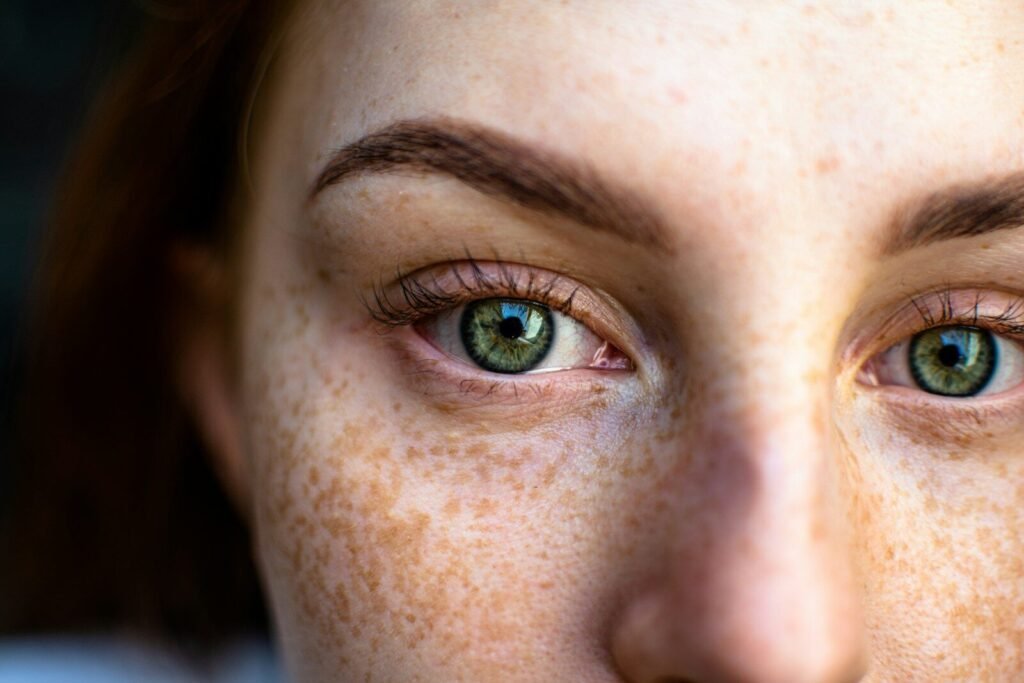
Post-inflammatory hyperpigmentation (PIH): flat, darkened patches following inflammation. These are not structural scars but are commonly present alongside them.
Post-inflammatory erythema (PIE): persistent vascular redness or pink/purple discolouration, more prevalent in fairer skin tones and often mistaken for active acne.
Each scar type has a distinct treatment rationale. Rolling scars with tethering require release of fibrous bands. Ice pick scars may benefit from focal techniques working at depth. Boxcar scars often respond to resurfacing and collagen stimulation protocols. A plan that conflates these types will not address each one effectively.
Treatment Modalities: A Clinical Overview
Treatment for acne scarring draws on several broad categories of modality. For most patients, meaningful improvement requires a combination approach: using different treatments for different scar types, or sequencing them strategically across multiple sessions.

Laser and light-based treatments
Laser-based treatments are among the most extensively studied modalities for atrophic acne scarring. Ablative laser treatments resurface the outer skin layer and stimulate significant collagen remodelling; they tend to require fewer sessions but involve a meaningful recovery period. Non-ablative and fractional approaches deliver energy beneath the skin surface with less disruption to the outer layer, reducing downtime while still promoting collagen renewal over a series of treatments.
Light-based therapies are particularly useful for the vascular and pigmentation components of post-acne changes, addressing PIE and PIH alongside or separately from structural scar treatment.
At SW1 Clinic, we offer a range of laser and light treatments as part of our acne scar programmes. The appropriate modality depends on scar type, skin tone, and individual recovery tolerance. This is determined at consultation.
Radiofrequency and micro-needling
Radiofrequency (RF) treatments deliver controlled thermal energy to the dermis, stimulating collagen and elastin production. When combined with micro-needling, which creates controlled micro-injuries in the skin, these modalities work well for textural irregularities, mild to moderate atrophic scarring, and patients who prefer lower-downtime options. RF-based treatments are generally well-tolerated across a range of skin tones, making them particularly relevant in Singapore’s multi-ethnic patient population.
Subcision
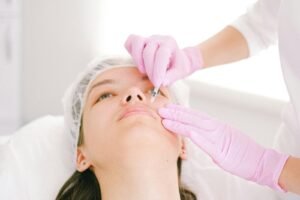
For rolling scars with fibrous tethering, subcision (a technique in which a fine needle releases the bands anchoring the skin downward) is a well-established clinical approach. It is frequently combined with energy-based or resurfacing treatments as part of a multi-stage protocol.
Chemical peels and topical preparation
Certain chemical peels help address superficial textural irregularities and post-inflammatory pigmentation. Topical agents, including retinoids and pigment-regulating formulations, are often incorporated in the lead-up to and between treatment sessions to optimise skin condition and reduce the risk of post-treatment hyperpigmentation.
For patients in the early phase of post-acne changes, our Scar Prevention Programme provides a structured approach to reducing the severity of early scarring. For established scarring, our Scar Intervention Programme coordinates a multi-session plan tailored to the individual presentation.
Understanding Downtime
Downtime is one of the most important, and most frequently underestimated, aspects of acne scar treatment planning. What downtime means in practice depends on the modality chosen, treatment intensity, and individual healing response.
As a broad clinical framework:
- 1–3 days: Mild redness and swelling, typical of non-ablative or lighter energy-based treatments. Most patients can return to an office environment within 24–48 hours.
- 4–7 days: More pronounced redness, swelling, and possible surface crusting or peeling. Social and professional commitments need to be planned around the treatment.
- 7–14 days: Expected with more intensive resurfacing protocols. Patients should anticipate meaningful social downtime and avoid tight professional or personal commitments during this window.
Equally important: downtime and healing time are not the same thing. The visible recovery period is only the early phase of a longer collagen remodelling process that continues for months after treatment. Textural improvement from a single resurfacing session, for example, continues to develop over three to six months.
Sun protection during and after recovery is non-negotiable in Singapore’s UV environment. Post-treatment skin is more vulnerable to UV-triggered pigmentation; inadequate sun protection during recovery can introduce new hyperpigmentation that undermines the treatment outcome.
Why Treatment Planning Matters
The most common source of unmet expectations in acne scar management is treating in isolation: a single session, a single modality, without a structured protocol.
An effective treatment plan typically includes:
- A thorough consultation: scar mapping, skin tone classification, review of acne history and prior treatments, and assessment of current medications
- A sequenced protocol: treatments ordered strategically; for example, addressing active acne or significant post-inflammatory pigmentation before initiating resurfacing
- Adequate inter-session intervals: time for the skin to heal and collagen to mature between treatments
- Ongoing review, with protocol adjustments based on how the skin responds at each stage
At SW1 Clinic, our approach is consultation-led. Suitability for specific modalities, and the sequence in which they are used, depends on scar type, skin condition, and downtime tolerance. We do not recommend treatments before completing a proper clinical assessment.
When to Seek a Consultation
Consider a formal consultation with an aesthetic doctor if you have:
- Persistent textural changes following acne that have not improved over time
- Pitted or depressed scarring that has been present for six months or more
- Post-inflammatory marks (pigmentation or redness) lasting more than three months
- Uncertainty about which treatments are appropriate for your specific scar types
Self-selecting treatments based on online reviews or peer recommendations without clinical assessment often leads to mismatched choices and slower progress. Acne scar management is most effective when the plan is built around an accurate understanding of the individual presentation.
Book a Consultation at SW1 Clinic
Acne scar management is a clinical discipline that benefits from an individualised plan, realistic expectations, and a structured sequence of appropriate treatments. We welcome patients who are approaching their skin concerns with the same rigour.
Book a consultation at SW1 Clinic to discuss your scar presentation with one of our doctors and explore the treatment options most appropriate for you.
Results may vary between individuals. Suitability for any treatment is assessed at consultation.
Follow Dr Low Chai Ling, Founder and Medical Director of SW1 Clinic
LinkedIn · Substack · Instagram · YouTube · TikTok · lowchailing.com
Follow SW1
Instagram: @sw1clinic, @sw1beauty, @sw1spa, @sw1shopsg · Facebook: SW1 Clinic, SW1 Spa · TikTok · YouTube · LinkedIn · Pinterest · Telegram
More from SW1: SW1 Spa blog · SW1 Shop blog