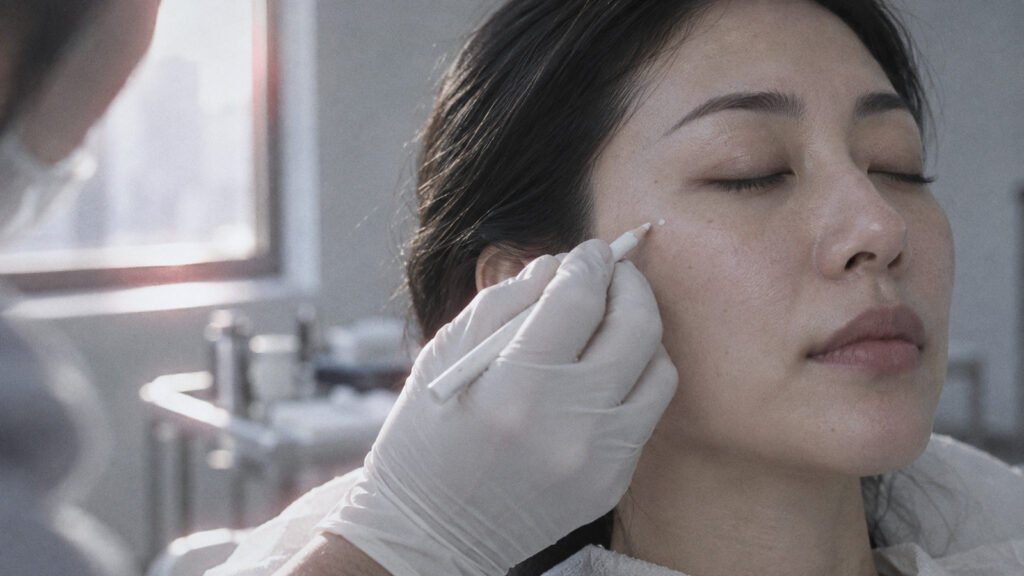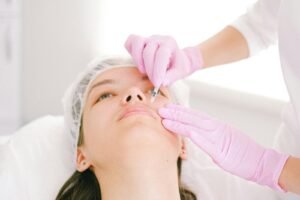







Many people who come to SW1 Clinic know that something is bothering them. They are less sure of exactly what it is.
This is not a failure of observation. It reflects a genuine complexity in how the face ages and changes. Someone who says their skin looks “tired” may be experiencing volume loss, pigmentation, skin laxity, dehydration or a combination of these. Each needs a different clinical approach, so getting the assessment right is the starting point.
Step 1: assess the colour
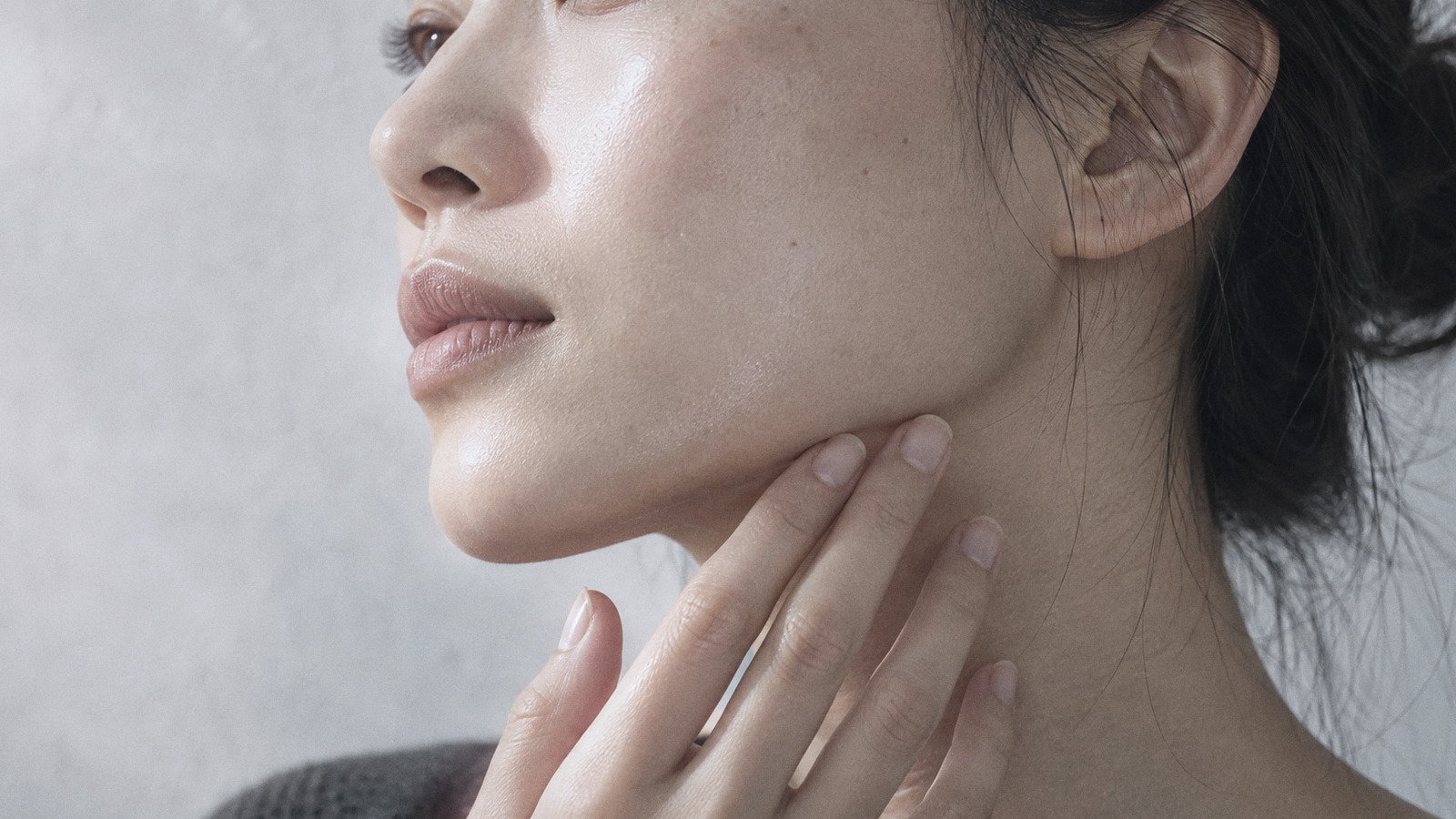
Begin with tone. In natural light, look at whether your skin is broadly even or whether there are areas of contrast: darker spots, patches of redness, or a mismatch between the centre of the face and the jawline.
Brown unevenness often points to a build-up of pigment, either from sun exposure over time or from post-inflammatory pigmentation after breakouts. Redness or flushing suggests a vascular component. Greyish flatness without visible pigmentation is often a sign of dehydration or surface congestion.
Step 2: assess the structure
Hold a mirror at eye level and look at the contours of your face. Where are the shadows? Has the cheek volume dropped? Is the jawline less defined than it was?
Structural changes are often mistaken for skin quality issues. Someone who looks “tired” may have good skin quality but has lost some of the volume that once kept shadows at bay.
For structural concerns, ContourLux is a PDLLA-based, collagen-stimulating treatment designed for lower-face contouring and definition. Ultherapy Prime uses focused ultrasound at the depth of the SMAS layer, and lifting develops progressively over time. Results may vary.
Step 3: assess the texture
Run your fingertips across your cheeks and forehead. Do you feel roughness, bumps or visible pores?
Texture concerns often involve pore visibility, a build-up of dead skin cells and low-grade congestion. Airbrush FX Dual Laser combines two wavelengths designed to work on texture and residual pigmentation in the same session. SmartX Lite is a fractional CO2 laser that may help refine pores and overall skin surface quality. Results may vary.
Step 4: assess the firmness
Gently pinch and release the skin on your cheek. How quickly does it return? Feel along the jawline: is there a distinct edge?
Loss of firmness can respond to both energy-based treatments and injectable support. EternaLift RF is a radiofrequency microneedling treatment designed to stimulate collagen remodelling at depth. Youth Savant uses PDRN for regenerative skin rejuvenation. Results may vary.
Why the order of assessment matters
The sequence of colour, structure, texture and firmness covers the four dimensions that shape how skin reads. Many people spot one concern straight away but miss others that contribute just as much to what they see. SW1 Clinic’s skin and body concerns pages explain each concern in more detail.
Once you have a sense of your main concern, SW1 Shop’s skincare by skin concern and SW1 Spa’s facials by skin concern are a simple way to match home care and spa care to it.
SW1 doctors approach consultations as a diagnostic process, not a menu selection. The goal is to understand the skin’s actual state before recommending any treatment.
Book an aesthetic consultation to have your skin assessed by an SW1 doctor.
Treatments at SW1 Clinic are physician-administered or supervised, and suitability is assessed individually. Results may vary.
Follow Dr Low Chai Ling, Founder and Medical Director of SW1 Clinic
LinkedIn · Substack · Instagram · YouTube · TikTok · lowchailing.com
Follow SW1
Instagram: @sw1clinic, @sw1beauty, @sw1spa, @sw1shopsg · Facebook: SW1 Clinic, SW1 Spa · TikTok · YouTube · LinkedIn · Pinterest · Telegram
More from SW1: SW1 Spa blog · SW1 Shop blog