







Facial ageing is often simplified as “skin getting older.” In reality, this is one of the biggest misconceptions in aesthetic medicine.
Ageing is a multi-layered biological process involving changes to bone, fat, ligaments, muscle, skin, and cellular signalling. Understanding how and where ageing occurs is essential to achieving natural, long-term aesthetic results.
This article explains facial ageing from a medical and anatomical perspective, and why accurate diagnosis — not trend-driven treatments — matters most.
Facial Ageing Is Not Just Skin Deep

Facial ageing occurs across five interdependent layers:
- Bone (skeletal support)
- Ligaments (structural suspension)
- Fat compartments (volume and contour)
- Muscle (dynamic movement)
- Skin (quality, elasticity, and barrier function)
Changes in any one layer affect all others. Treating only the skin — or only volume — without understanding the full structure often leads to unnatural or short-lived results.
Layer 1: Bone Resorption — The Foundation Shrinks
With age, facial bones undergo resorption.

Key changes include:
- Widening of the eye sockets
- Recession of the maxilla (midface)
- Loss of jawline definition
As the skeletal foundation recedes, the overlying soft tissues lose support. This contributes significantly to:
- Facial sagging
- Flattening of the midface
- Deepening of folds
This process explains why lifting skin alone cannot fully restore youthful contours.
Layer 2: Ligament Laxity — The Framework Weakens
Facial ligaments anchor soft tissues to bone. Over time, these ligaments:
- Elongate
- Lose tensile strength
- Shift position
As ligament support weakens, fat pads descend, creating:
- Nasolabial folds
- Jowling
- Hollowing above and fullness below
This downward migration is often mistaken as “extra fat,” when it is actually displacement.
Layer 3: Fat Compartment Changes — Loss, Shift, and Imbalance
Facial fat does not disappear evenly.

Ageing causes:
- Volume loss in deep fat compartments
- Relative fullness or descent in superficial fat
- Loss of smooth transitions between facial zones
This leads to shadows, hollows, and contour irregularities. Overfilling without structural planning can worsen heaviness and distortion.
Layer 4: Muscle Dynamics — Repetitive Motion and Imbalance
Facial muscles are in constant use.
Over decades, repetitive contraction contributes to:
- Dynamic lines becoming static wrinkles
- Muscle shortening and dominance in certain regions
- Compensatory overactivity in others
Ageing faces are often not “weak,” but imbalanced.
Layer 5: Skin Biology — Collagen, Elastin, and Barrier Decline
Skin ageing is driven by both intrinsic and extrinsic factors.
Key biological changes include:
- Decline in collagen production
- Fragmentation of elastin fibres
- Reduced hydration and barrier integrity
- Slower cellular turnover
These processes explain:
- Thinning skin
- Loss of elasticity
- Increased sensitivity and pigmentation
Importantly, improving skin quality alone cannot correct deeper structural ageing — but it plays a crucial supportive role.
Why the Face Sags With Age: A Combined Effect .
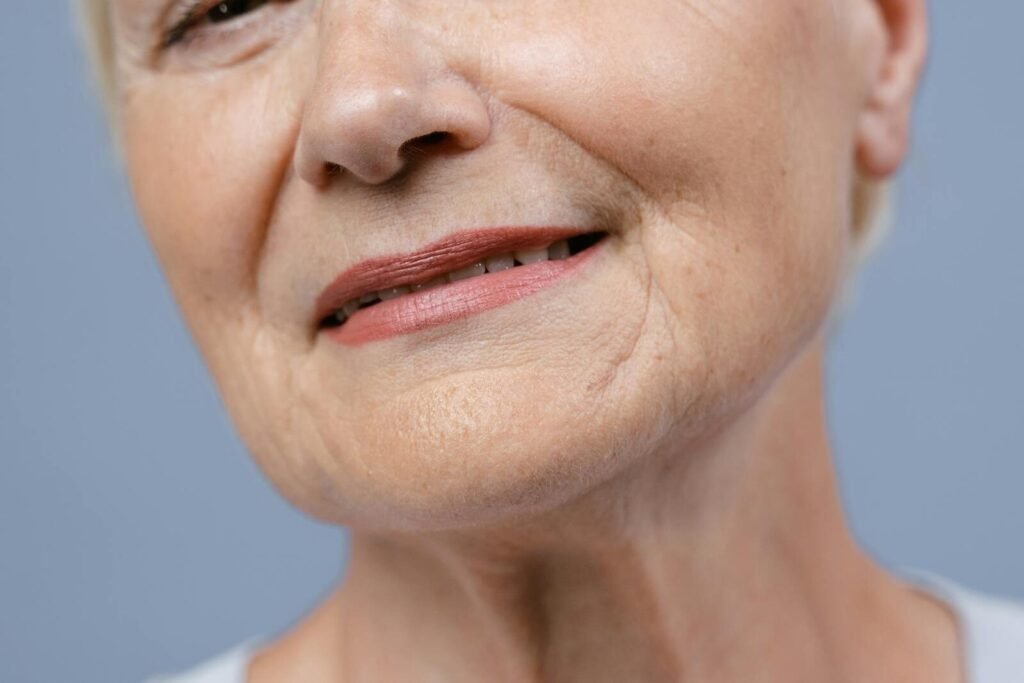
Facial sagging is not caused by gravity alone.
It is the result of:
- Structural bone loss
- Ligament laxity
- Fat compartment shift
- Muscle imbalance
- Skin collagen depletion
This is why single-modality treatments rarely succeed in the long term.
Why Accurate Diagnosis Matters More Than Any Single Treatment
Two patients of the same age can have entirely different ageing patterns:
- One may be volume-deficient
- Another may have ligament laxity
- A third may primarily have skin quality decline
Without a proper medical assessment, treatments risk addressing the wrong layer — leading to over treatment, unnatural results, or rapid relapse.
A Multidisciplinary Perspective Leads to Better Outcomes
Clinics that integrate aesthetic doctors and plastic surgeons are uniquely positioned to assess facial ageing objectively.
This collaboration allows clinicians to:
- Distinguish structural ageing from surface changes
- Decide when non-surgical treatments are appropriate
- Avoid pushing treatments beyond their biological limits
The result is a plan that prioritises balance, restraint, and longevity.
Facial Ageing and Long-Term Aesthetic Planning
The most natural aesthetic outcomes are achieved when treatments:
- Respect facial anatomy
- Address ageing at the correct depth
- Are spaced and staged over time
- Preserve future treatment options
Aesthetic medicine is most effective when it supports the face’s natural ageing process — rather than fighting it aggressively.
Final Thoughts
Facial ageing is a complex interaction between structure, biology, and time.
Understanding how the face ages allows for:
- More precise treatment selection
- Fewer unnecessary interventions
- Safer, more natural long-term results
In aesthetics, knowledge of anatomy and restraint remains more powerful than any single device or injectable.
Follow Dr Low Chai Ling, Founder and Medical Director of SW1 Clinic
LinkedIn · Substack · Instagram · YouTube · TikTok · lowchailing.com
Follow SW1
Instagram: @sw1clinic, @sw1beauty, @sw1spa, @sw1shopsg · Facebook: SW1 Clinic, SW1 Spa · TikTok · YouTube · LinkedIn · Pinterest · Telegram
More from SW1: SW1 Spa blog · SW1 Shop blog