







If you have been exploring injectable skin treatments, you have almost certainly encountered both terms: skin booster and bio-remodeller. Both use hyaluronic acid (HA). Both involve injections. Both improve skin quality.
And yet they are fundamentally different treatments, designed to address different skin concerns through different mechanisms.
Understanding the distinction matters — because choosing the wrong one means spending money on a treatment that won’t give you the result you’re looking for.
Skin Boosters: Deep Hydration From Within
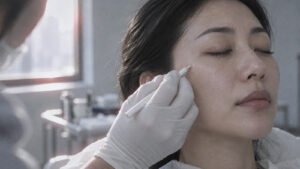
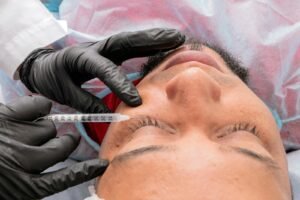
Skin boosters use a low-viscosity, cross-linked or non-cross-linked hyaluronic acid that is injected in small amounts (microinjections) throughout the dermis. This approach is an ideal entry point for patients who are not ready for fillers but want to address the underlying signs of aging without changing their facial contours. The HA acts as a sponge, attracting and binding water molecules within the skin tissue.
The result is immediate and visible: intensely hydrated, plump, glowing skin. Fine lines caused by dehydration soften, and skin texture improves. There is a luminosity to treated skin that is difficult to replicate with topical moisturisers alone—because the hydration is happening at the dermal level, not just on the surface. For those seeking even deeper cellular repair, boosters are often paired with PDRN and polynucleotides to enhance skin regeneration and heal damage at a biological level, providing a dual-action approach to “injectable skincare.”
Skin booster results typically last six to nine months, with most patients on a maintenance schedule of one to two treatments per year once the initial course is complete.
Bio-Remodellers: Collagen Stimulation and Structural Improvement
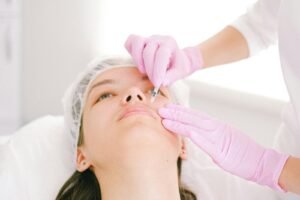
Bio-remodellers use a very high concentration of hyaluronic acid — both high and low molecular weight — in a formulation that spreads diffusely through the tissue rather than staying localised. Rather than simply hydrating, a bio-remodeller stimulates the skin’s own fibroblasts to produce new collagen and elastin.
The treatment protocol is typically two sessions, four weeks apart, with results continuing to develop over the following months as new collagen forms. The benefits go beyond hydration: improved skin laxity, better elasticity, firmer texture, and a reduction in the crepey quality that comes with natural collagen decline.
“Patients often ask me which is better — bio-remodeller or skin booster. My answer is always: it depends on what your skin needs. If you need deep hydration and glow, skin boosters. If you want to address laxity and stimulate your own collagen, bio-remodeller. Sometimes the answer is both.”
— Dr Low Chai Ling, SW1 Clinic
How to Choose
Choose a Skin Booster If:
- Your primary concern is dryness, dullness, or loss of glow
- You are in your mid-20s to late 30s with good skin quality
- You want immediate visible improvement in skin radiance
- You are preparing for an event or want a skin “refresh”
Choose a Bio-Remodeller If:
- You are noticing early laxity — skin that is beginning to feel less firm or elastic
- You are 38 and above, or post-menopausal
- You have crepey skin texture, particularly around the neck and décolletage
- You want structural improvement, not just surface hydration
Consider Both If:
- You have multiple concerns — both hydration and laxity
- Your doctor assesses that your skin would benefit from a combined approach
Can You Combine Them?
Yes, and this is increasingly common. A bio-remodeller provides the structural foundation — stimulating the collagen and elastin framework — while a skin booster provides the surface hydration and glow. The two work synergistically. Your doctor can advise whether a combined approach makes sense for your skin at your consultation.
A Note on Managing Expectations
Neither treatment is a facelift. Bio-remodellers and skin boosters work with your biology to improve skin quality — they do not add volume, define contours, or replace more targeted treatments for specific concerns like under-eye hollows or deep folds. Understanding what each treatment can and cannot do allows you to make an informed decision.
Follow Dr Low Chai Ling, Founder and Medical Director of SW1 Clinic
LinkedIn · Substack · Instagram · YouTube · TikTok · lowchailing.com
Follow SW1
Instagram: @sw1clinic, @sw1beauty, @sw1spa, @sw1shopsg · Facebook: SW1 Clinic, SW1 Spa · TikTok · YouTube · LinkedIn · Pinterest · Telegram
More from SW1: SW1 Spa blog · SW1 Shop blog