








What Is Sagging & Skin Laxity?
Sagging and skin laxity refer to the gradual loss of firmness, support and structural definition in the face. Patients may notice softening of the jawline, heaviness around the cheeks, deepening smile lines or drooping around the lower face.
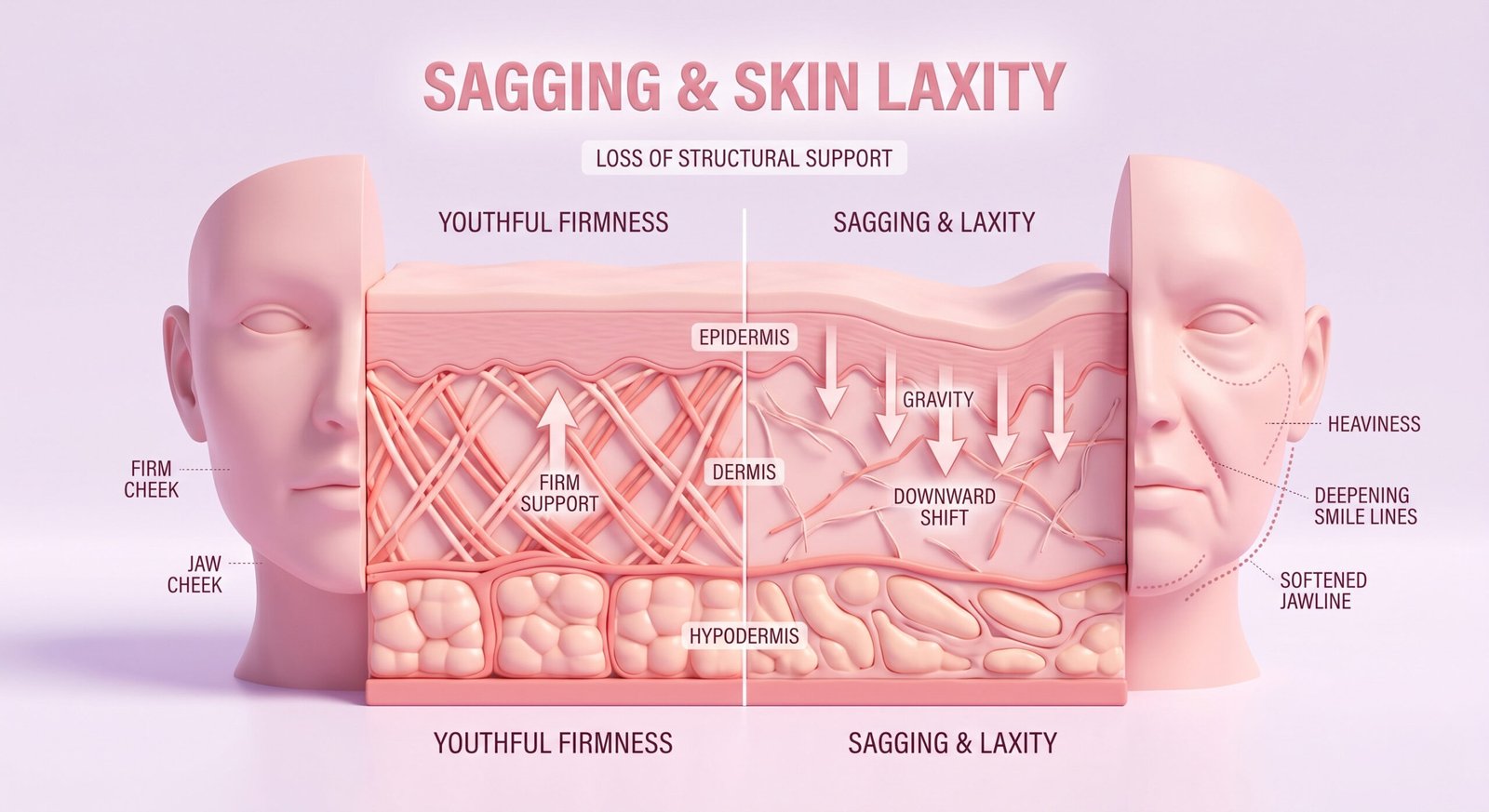
While often associated with “loose skin,” true structural ageing involves more than surface laxity. It reflects deeper changes in collagen strength, ligament support and facial volume distribution.
Structural ageing affects the framework that holds the face in place and not just the skin on the surface!
Why Does Facial Sagging Occur?
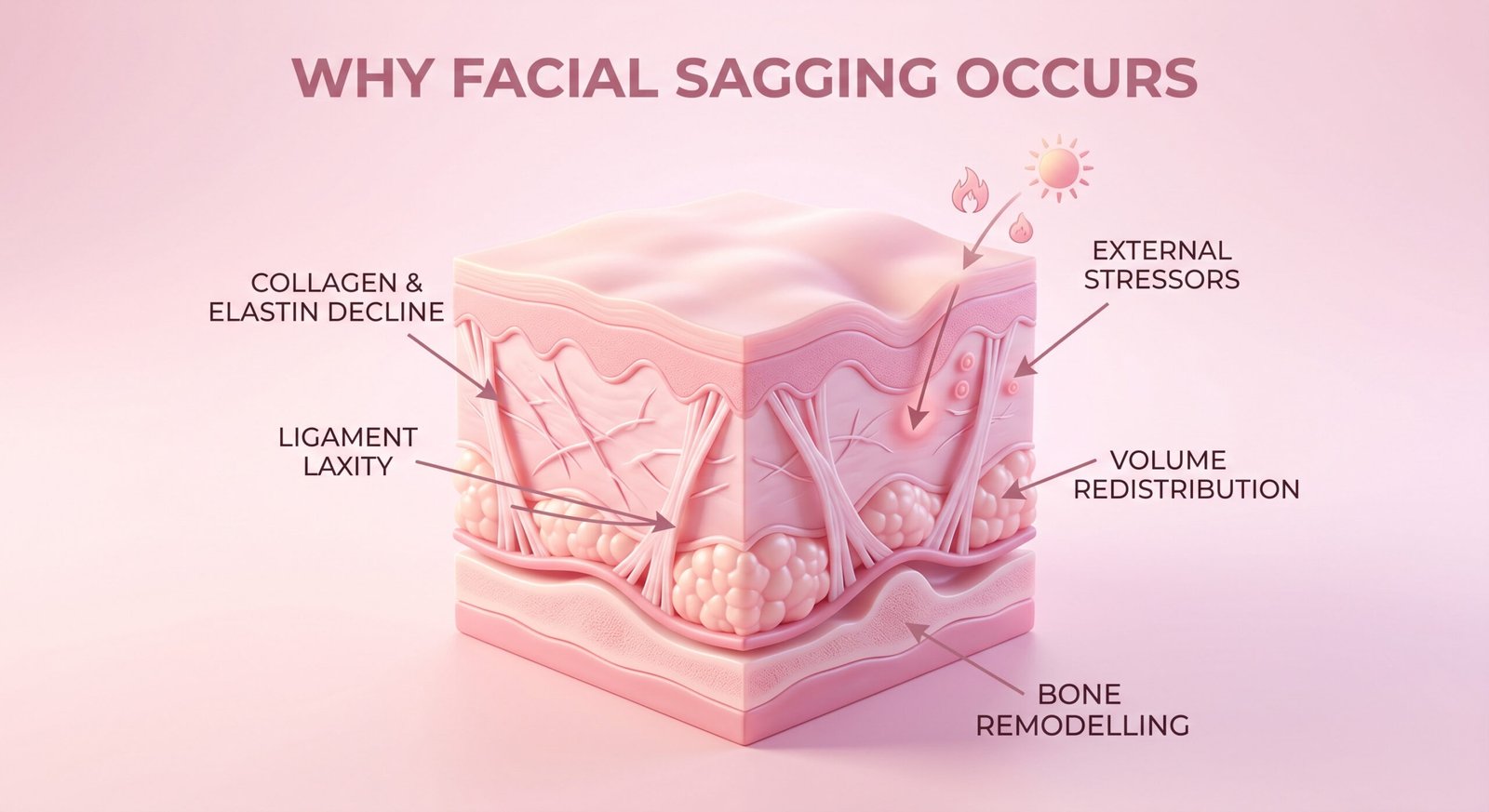
Facial sagging develops due to several overlapping biological processes:
Collagen and elastin decline
With age, collagen fibres become weaker and less organised, reducing skin firmness and recoil.
Ligament laxity
Facial retaining ligaments that anchor soft tissue gradually lose tension, allowing tissue descent.
Volume redistribution
Fat compartments in the face shrink or shift, altering facial support and contour.
Bone remodelling
Subtle changes in facial bone structure over time reduce foundational support.
External stressors
UV exposure, chronic inflammation and lifestyle factors accelerate structural weakening.
Sagging may begin subtly in the early to mid-30s and progressively becomes more noticeable over time.
What Should Be Targeted in Structural Ageing?
Effective treatment should address support and structure — not simply tighten the surface. Key medical targets include:
- Strengthening collagen architecture
- Restoring structural support where volume has declined
- Improving skin elasticity and recoil
- Supporting deeper tissue stability
- Encouraging gradual, natural regeneration
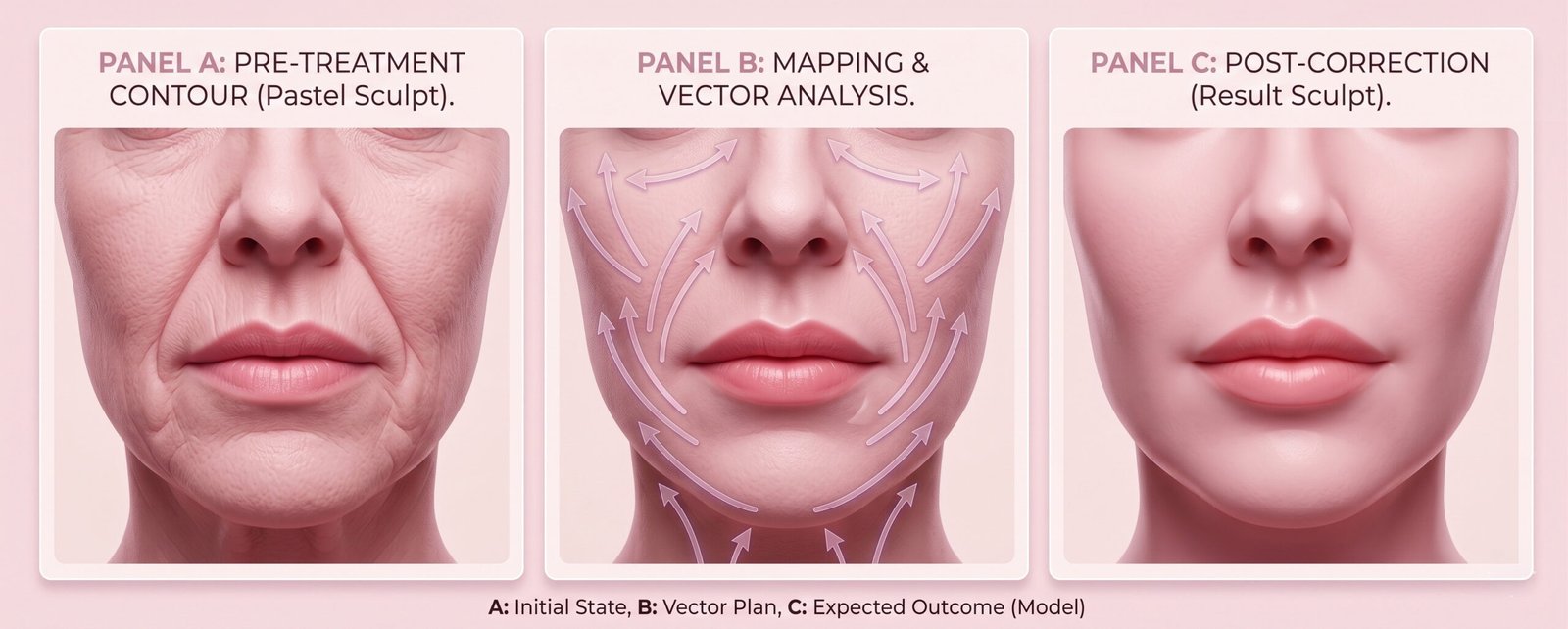
Surface-only treatments may temporarily improve appearance but often do not address the underlying framework.