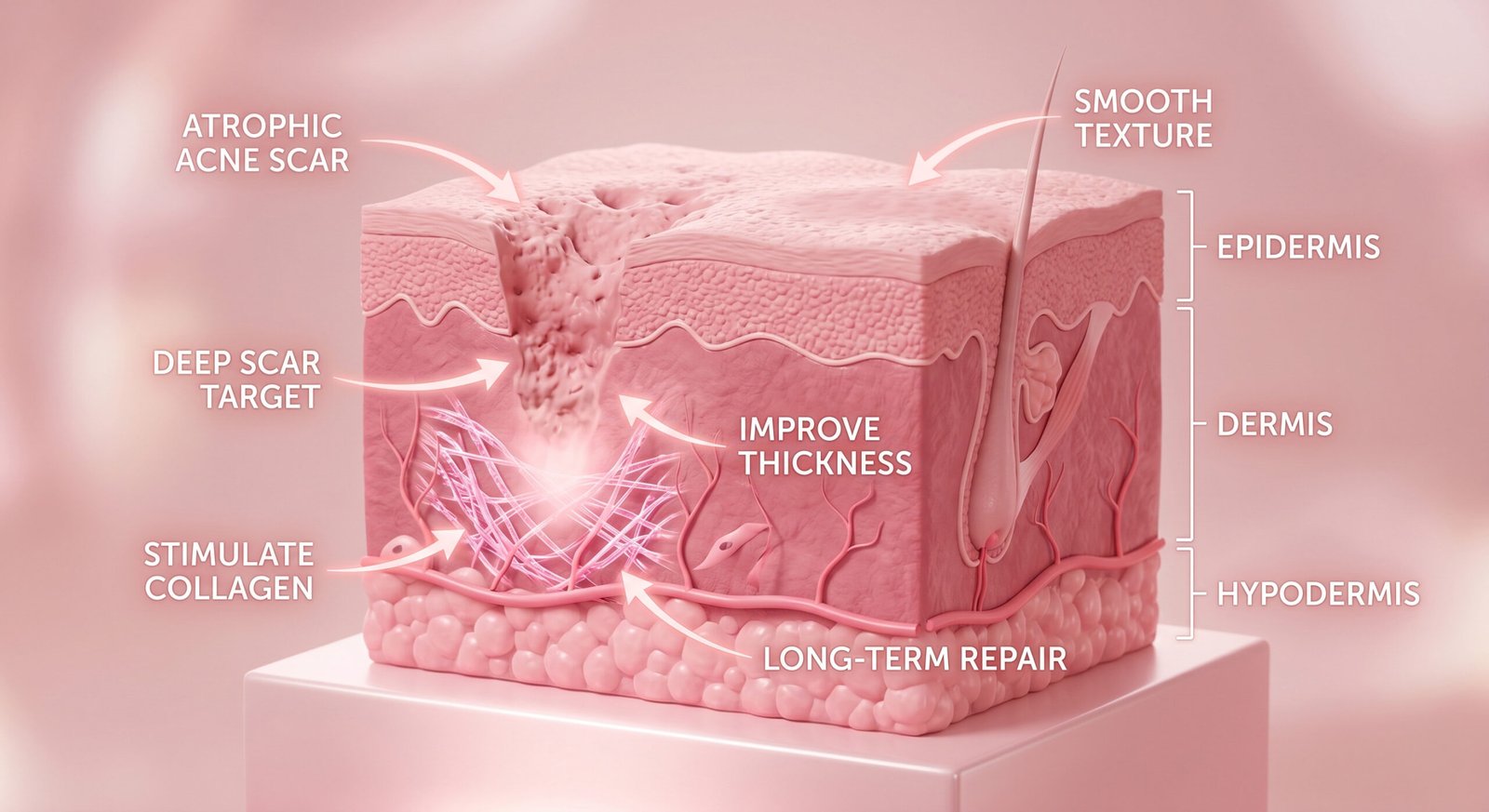









What Are Acne Scars?
Acne scars are textural changes that remain after inflamed acne lesions heal. They may appear as indentations, uneven surface texture or persistent marks that affect overall skin smoothness.
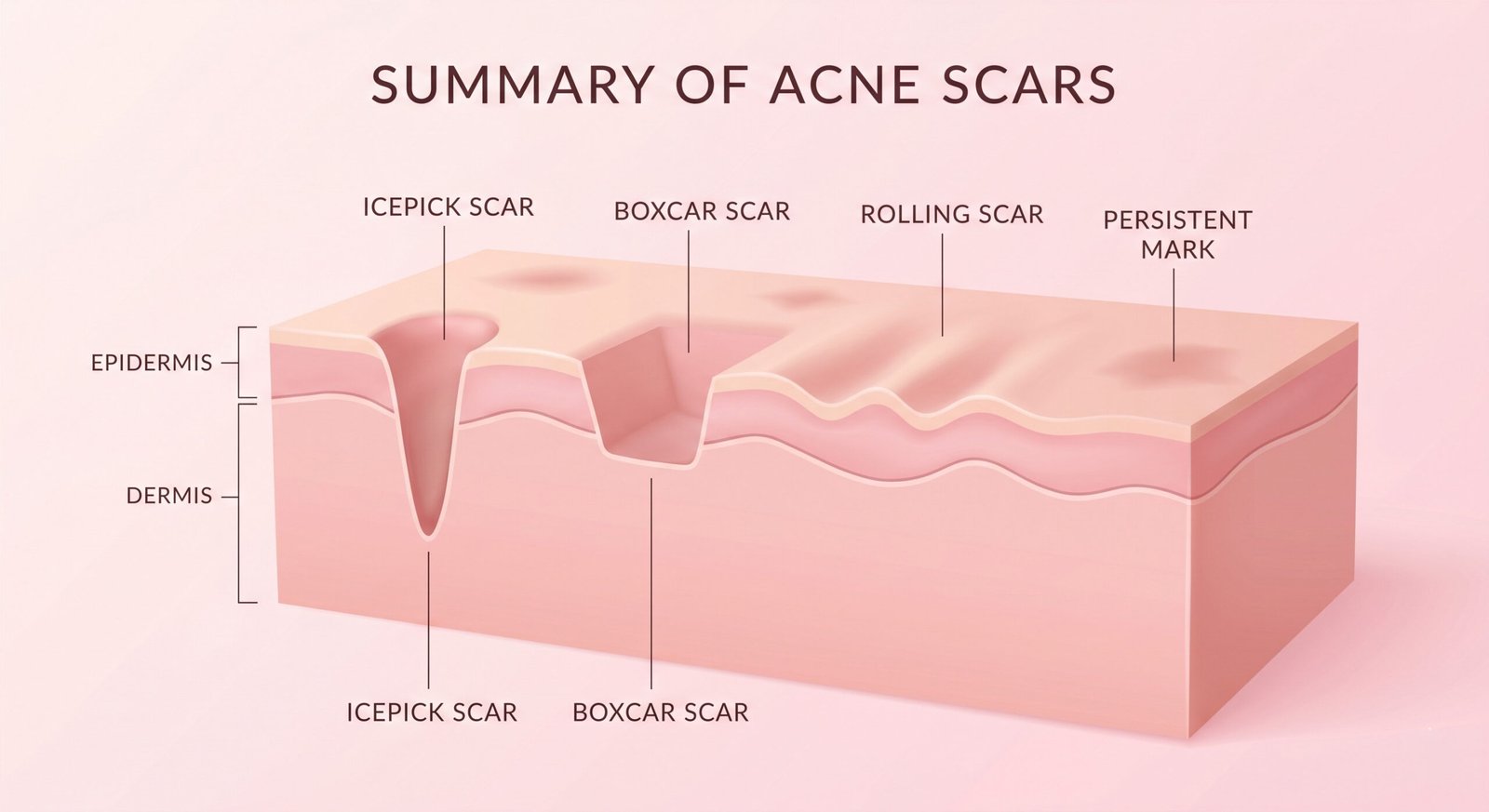
Unlike temporary pigmentation, true acne scars involve structural changes within the skin. Collagen loss during healing can result in depressed or uneven areas that do not resolve on their own. Textural irregularities may vary in depth and pattern, requiring different treatment approaches.
Why Do Acne Scars Form?
Acne scars develop when inflammation disrupts normal collagen repair. Common contributing factors include:
Severe or prolonged inflammation
Deep cystic acne increases the risk of permanent scarring.
Delayed or improper treatment
Untreated inflammatory acne may damage surrounding tissue.
Collagen breakdown during healing
Insufficient collagen production can leave depressed scars.
Genetic predisposition
Some individuals are more prone to scar formation.
Early acne control reduces the risk, but once scars form, targeted treatment is often required.
What Should Be Targeted?
Effective acne scar treatment should focus on:
- Stimulating collagen regeneration
- Improving skin thickness
- Smoothing uneven texture
- Supporting long-term dermal repair
Superficial treatments alone may not adequately address deeper scars.