








Pigment Eraser

Laser Pigmentation Removal Singapore: Pigment Eraser Picosecond Technology
Brown spots, sun damage, stubborn post-blemish marks — these are among the most common skin concerns that patients in Singapore bring to SW1 Clinic. And for good reason: years of equatorial UV exposure, combined with the natural tendency of Asian skin toward post-inflammatory hyperpigmentation, create a pattern of uneven skin tone that can be deeply frustrating. The Pigment Eraser is SW1 Clinic’s picosecond laser pigmentation removal treatment — a sophisticated technology that shatters melanin into microscopic fragments for more efficient clearance by the body. Available at our clinic, Pigment Eraser is calibrated specifically for Asian skin tones, addressing both the clinical and the psychological desire to truly erase unwanted spots.
The Science of Melanin Fragmentation: Picosecond vs Nanosecond
To understand why Pigment Eraser represents a meaningful advance in laser pigmentation removal, it helps to understand the difference between picosecond and nanosecond laser technology.
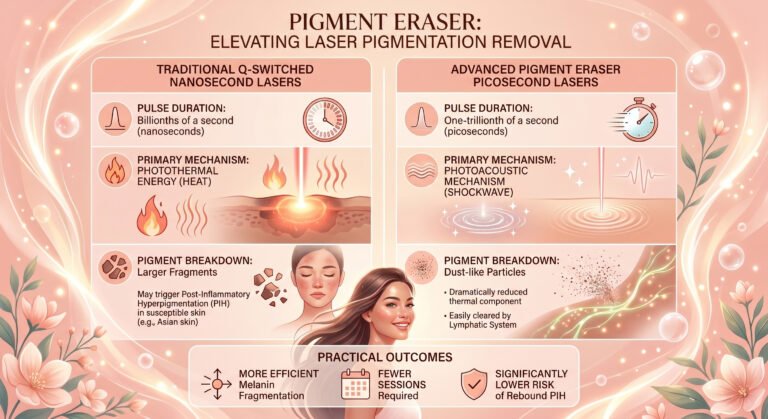
Traditional Q-switched nanosecond lasers deliver pulses in billionths of a second (nanoseconds). Picosecond lasers — the technology at the heart of Pigment Eraser — deliver pulses that are one-trillionth of a second in duration. This seemingly small difference has significant implications for how pigment is broken down.
Nanosecond pulses primarily destroy pigment through photothermal energy — heat. While effective, this thermal mechanism also affects surrounding tissue and can create sufficient heat to trigger post-inflammatory pigmentation in susceptible skin. Picosecond pulses work through a photoacoustic mechanism — the ultra-short pulse creates a shockwave that shatters pigment into dust-like particles so small they are easily cleared by the body’s lymphatic system. The thermal component is dramatically reduced.
The practical outcome: more efficient melanin fragmentation with fewer sessions required, and a meaningfully lower risk of the rebound PIH that is a genuine concern for Asian skin undergoing pigmentation treatments.
Calibrated for Asian Skin: Addressing the PIH Fear
SW1 Clinic is known for taking the specific needs of Asian skin seriously in all its treatment protocols. The fear of post-inflammatory hyperpigmentation — where treatment triggers new darkening rather than clearing existing pigment — is legitimate and well-founded. It is one of the primary reasons patients with medium to darker skin tones have historically been cautious about laser pigmentation treatments.
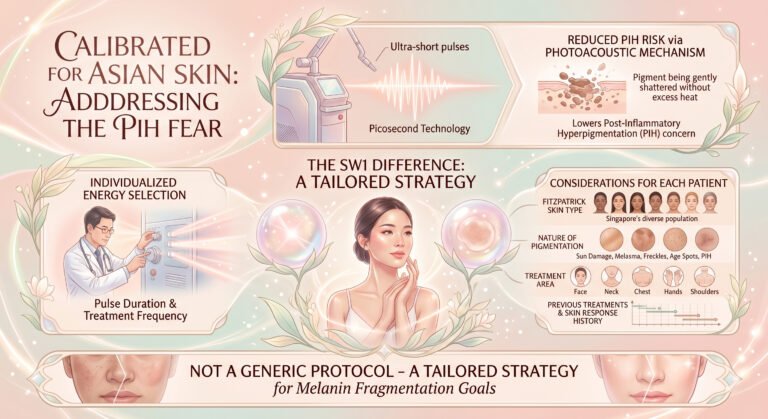
Pigment Eraser’s picosecond technology significantly reduces this risk through its photoacoustic mechanism. However, calibration matters enormously. What sets SW1 apart is the careful, individualized approach our doctors take to energy selection, pulse duration, and treatment frequency for each patient.
Our team considers:
- Fitzpatrick skin type (Singapore’s population spans a wide range)
- Nature of the pigmentation (sun damage, melasma, PIH, freckles, age spots)
- Treatment area (face, neck, chest, hands, shoulders)
- History of previous treatments and skin response
This level of personalisation means that the Pigment Eraser programme is not a generic protocol — it is a tailored strategy for each patient’s specific melanin fragmentation goals.
What Happens After Treatment: The Darkening and Flaking Process
It is important to be transparent about what to expect following a Pigment Eraser session, because understanding the normal post-treatment sequence prevents unnecessary concern and allows patients to track their progress accurately.
In the 24–72 hours following treatment, targeted pigmented spots will often appear darker. This darkening is not a sign that treatment has made the pigmentation worse — it is the opposite. It indicates that the laser has successfully fragmented the melanin within the spot, and the body’s immune response is beginning to process and remove the shattered particles. The darkened spot then begins to flake away naturally over the following 5–14 days, gradually revealing clearer skin beneath.
This sequence — darkening, then flaking, then clearing — is the expected progression. It is important not to pick at or scrub the treated areas during this phase. Allow the natural exfoliation process to occur on its schedule.
Many patients find it reassuring to understand this process in advance, which is why our clinical team at SW1 Clinic walks through it at every pre-treatment consultation.
Treatment Areas: Face, Neck, Hands, Chest, and Shoulders
One of the significant advantages of Pigment Eraser is its versatility across body areas. Sun damage and pigmentation do not stop at the jawline — many patients develop visible age spots and discolouration on the neck, décolletage, chest, backs of the hands, and shoulders.
Pigment Eraser can effectively address all of these areas, making it one of the few pigmentation treatments that can be applied as part of a whole-body approach to skin clarity. Body pigmentation — particularly on the hands and chest — is an area of growing interest among Singapore’s patients who maintain active outdoor lifestyles.
For skin health support between sessions, complementary treatments such as Youth Preserve or LED Red Light Therapy can support the skin’s healing and renewal processes, extending and deepening the overall result.

Planning Your Pigment Eraser Programme
Most patients require between 3–6 sessions of Pigment Eraser spaced 4–6 weeks apart, depending on the type, depth, and volume of pigmentation being addressed. Results are typically progressive — each session clears additional pigment and refines overall tone.
For patients looking to invest in an ongoing skin clarity strategy, the Porcelain Skin Program provides a curated framework for pigmentation management as a continuous practice, with session bundling and clinical monitoring included.
*Clinical results may vary depending on individual skin conditions and baseline health.
Consultation
Pigmentation consultation with Dr Low
Different pigmentation patterns may require different approaches. Dr Low assesses the nature, depth and distribution of pigmentation, together with skin type and treatment history, before recommending a suitable plan.
New consultation requests are reviewed by Dr Low's team and offered subject to clinical suitability and availability. Recommendations are made following an individual medical consultation.
FAQS
Will Pigment Eraser work on my skin type?
Pigment Eraser’s picosecond technology is calibrated for a range of skin tones including the medium to darker Asian skin types common in Singapore. Your doctor will assess your skin type and pigmentation pattern before recommending a treatment plan.
Why do spots darken after treatment — is that normal?
Yes, this is completely normal and expected. The darkening indicates that the laser has successfully fragmented the melanin in the spot. The darkened pigment then flakes away naturally over 5–14 days, revealing clearer skin beneath. Do not pick or scrub the area.
How many sessions will I need?
Most patients require 3–6 sessions depending on the type, depth, and extent of pigmentation. Your doctor will assess progress at each session and adjust the treatment plan accordingly. Results vary.
Can Pigment Eraser treat post-acne marks (PIH)?
Yes. Post-inflammatory hyperpigmentation from acne, trauma, or previous procedures responds well to picosecond laser treatment. Because the photoacoustic mechanism reduces the risk of triggering new PIH, it is generally considered more appropriate for this concern than nanosecond lasers.
What aftercare is needed following each session?
Strict sun avoidance and SPF 50 application throughout the day are essential. Avoid any exfoliating products, retinoids, or acids until your doctor confirms the skin has fully healed, typically 5–14 days post-treatment.
Book a Consultation
Ready to erase what the sun has written on your skin? Book your Pigment Eraser consultation now.