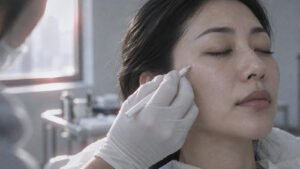







Acne scars are one of the most common reasons people seek aesthetic treatment in Singapore — and one of the most frequently undertreated. Not because the treatments don’t work, but because the wrong treatments are chosen for the wrong scar types. While many patients begin their journey researching how to remove acne scars, the reality is that “removal” is a process of reconstruction that must be tailored to the individual.
The key insight that changes everything: acne scars are not all the same. Each type has a different structure, a different depth, and a different treatment pathway. A laser that delivers excellent results for rolling scars can be almost completely ineffective for ice pick scars.
Getting this right starts with a correct diagnosis—a step that is especially vital for those still balancing active breakouts with a regimen of adult acne treatments while simultaneously trying to heal past damage. By addressing both the cause and the consequence, we can ensure the skin is stable enough to undergo intensive resurfacing.
The Four Main Types of Acne Scars
1. Ice Pick Scars
Ice pick scars are narrow, deep, V-shaped indentations that extend into the deeper layers of the dermis or subcutaneous tissue. They look exactly as the name suggests — as if a sharp instrument has punched a small hole into the skin. They are the most difficult acne scars to treat because of their depth and narrow shape.
2. Boxcar Scars
Boxcar scars are wider, round or oval depressions with sharply defined vertical walls. They sit less deep than ice pick scars, and their broader surface area makes them more responsive to resurfacing treatments. They are often described as giving skin a “pitted” or “cratered” appearance.
3. Rolling Scars
Rolling scars create a wave-like, undulating texture on the skin’s surface. They are caused by fibrous bands of tissue that tether the skin downward to the underlying tissue, creating traction. This structural cause means that resurfacing treatments alone are rarely sufficient — the tethering bands need to be released.
4. Hypertrophic and Keloid Scars
Unlike atrophic scars (which are indented), hypertrophic and keloid scars are raised — caused by an excess of collagen deposited during the healing process. Keloids extend beyond the original wound boundary; hypertrophic scars do not. Both are more common in individuals with darker skin tones.
“The most common mistake I see is patients getting the same laser for every type of scar. Acne scars are not all the same. A treatment that works beautifully on rolling scars will do almost nothing for deep ice pick scars. The diagnosis has to come first.”
— Dr Low Chai Ling, SW1 Clinic
Matching Treatment to Scar Type
Ice Pick Scars: TCA Cross and Ablative Resurfacing
TCA CROSS (Chemical Reconstruction of Skin Scars) involves applying high-concentration trichloroacetic acid precisely into each ice pick scar, triggering a localised inflammatory response that stimulates collagen to fill the scar from the base upward. It is one of the few techniques specifically effective for ice pick scars.
Deep ablative fractional lasers can also address ice pick scars, though multiple sessions are typically needed. Results are gradual.
Boxcar Scars: Fractional Lasers and RF Microneedling
Fractional ablative or non-ablative lasers resurface the skin and stimulate new collagen, reducing the depth and visibility of boxcar scars. Radiofrequency microneedling delivers energy directly into the dermis, triggering collagen remodelling that gradually lifts the base of the scar. Multiple treatments are required for meaningful improvement.
Rolling Scars: Subcision + Filler + Laser
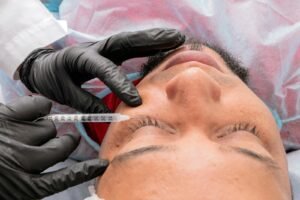
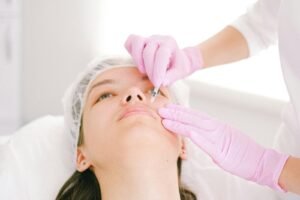
Rolling scars require a combination approach. Subcision — a procedure where a needle is inserted beneath the scar to break the fibrous tethering bands — releases the downward pull. This is often combined with an injectable filler to support the tissue as it heals, and followed by laser resurfacing to improve surface texture. This combination consistently produces the most significant improvement in rolling scars.
Hypertrophic and Keloid Scars: Steroid Injections and Laser
Intralesional corticosteroid injections flatten raised scars by reducing collagen overproduction. Pulsed dye laser or Nd:YAG laser can reduce redness and further flatten the scar. For keloids, a combination approach and realistic expectations about recurrence are important.
The Reality of Acne Scar Treatment
Acne scar treatment requires patience. Meaningful improvement typically comes after multiple sessions over several months. Sun protection during and between treatments is non-negotiable — UV exposure can worsen post-inflammatory hyperpigmentation and undermine results. For many patients, a specific laser for pigmentation is an essential companion to resurfacing treatments, helping to clear residual red or brown marks and unify the skin’s tone.
Most patients will see 40–70% improvement with a well-designed treatment plan. Complete scar elimination is rarely achievable, but significant improvement in texture and appearance is a realistic goal for most scar types.
Start With the Right Assessment
At SW1 Clinic, every acne scar assessment begins with a detailed classification of scar types present — because the right treatment plan depends entirely on knowing what you are treating.
WhatsApp us at +65 8218 3273 to book your consultation.
Related reading: best skin treatments for Asian skin in Singapore
Follow Dr Low Chai Ling, Founder and Medical Director of SW1 Clinic
LinkedIn · Substack · Instagram · YouTube · TikTok · lowchailing.com
Follow SW1
Instagram: @sw1clinic, @sw1beauty, @sw1spa, @sw1shopsg · Facebook: SW1 Clinic, SW1 Spa · TikTok · YouTube · LinkedIn · Pinterest · Telegram
More from SW1: SW1 Spa blog · SW1 Shop blog