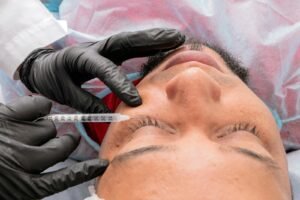








Of all the filler treatments available, tear trough is consistently ranked as one of the most requested—and one of the most technically demanding. When performed well, it can take years off a face and eliminate the hollow, shadowed look that makes people appear perpetually exhausted. When performed poorly, it can leave the under-eye area looking puffy, bluish, or worse than before.
Achieving a refreshed look requires more than just “filling a hole.” To avoid overfilled look, a practitioner must prioritize restraint and precise anatomical placement. This means using a conservative, “less-is-more” approach and selecting soft, low-viscosity fillers that integrate seamlessly with the delicate skin of the lower eyelid. This guide explains everything you need to know before considering tear trough fillers in Singapore—including who should and, just as importantly, who should not have this treatment.
What Is the Tear Trough?
The tear trough is the groove that runs from the inner corner of the eye downward along the cheek.
As we age, this area loses volume and the overlying skin thins, creating a hollow that casts a shadow — producing that classic “dark circle” or tired appearance that no amount of sleep seems to fix.
Hyaluronic acid filler placed strategically in this area can restore volume, reduce shadowing, and brighten the entire mid-face.
Who Is a Good Candidate?
The ideal tear trough candidate has:
- True volume loss — a genuine hollow, not just skin discolouration
- Good skin quality — the skin in the area has reasonable thickness and elasticity
- Mild to moderate concerns — not severe hollowing that would require surgical intervention
“Tear trough is one of the most technically demanding areas to treat. Done well, it takes years off. Done wrong, it makes the under-eye look puffy and grey. Not every patient is a good candidate — and knowing the difference is what separates a good outcome from a bad one.”
— Dr Low Chai Ling, SW1 Clinic
Who Is NOT a Good Candidate?
This is where many clinics fall short — by treating patients who would have been better served by a different approach, or by surgery.
Patients who are generally not suitable for tear trough filler include those with:
- Prominent fat pad prolapse — the “eyebags” that sit below the tear trough. Filler will not remove these and may actually make them more prominent.
- Very thin or translucent skin — increases the risk of the Tyndall effect (see below)
- Severe hollowing — may require a surgical blepharoplasty for a satisfying result
- History of significant swelling or fluid retention in the face
The Tyndall Effect: What It Is and How to Avoid It
The Tyndall effect is one of the most common complications of poor filler technique in the tear trough region—a bluish or greyish tinge under the eyes caused by hyaluronic acid filler placed too superficially. Light scatters differently through the gel when it sits too close to the skin surface, creating a discolouration that can be notoriously difficult to disguise with makeup.
Avoiding this requires placing the filler deep—at or near the bone—using a soft, low-viscosity product specifically designed for the delicate under-eye anatomy. This is a treatment where product selection and physician technique are everything; the goal is to eliminate the shadow, not replace it with a new one.
What to Expect
A tear trough filler treatment typically takes 20–30 minutes. A topical numbing cream is applied beforehand. Most practitioners use a cannula (blunt-tipped needle) rather than a sharp needle in this area, which reduces bruising and the risk of vascular complications.
Some swelling is normal immediately after treatment. The full result becomes visible once swelling settles, typically at the two-week mark. Results can last 12–18 months, depending on the product used and individual metabolism.
Potential Complications
Beyond the Tyndall effect, risks include bruising, swelling, asymmetry, and — in rare cases — vascular occlusion if the filler is inadvertently injected near a blood vessel. This is why tear trough filler should always be performed by an experienced, medically qualified injector with the training to recognise and manage complications.
Alternatives to Consider
For patients who are not ideal candidates for tear trough filler, options include cheek filler to provide structural lift to the mid-face (which indirectly improves the tear trough), skin-tightening treatments, and in some cases, a lower blepharoplasty consultation.
A good aesthetic doctor will assess the whole face, not just the area of concern, and recommend the approach most likely to give you the result you’re looking for. This often involves clarifying the roles of botulinum toxin vs fillers; while fillers are used to “fill” the hollows and shadows under the eyes, toxin is used to relax the active muscles that cause “crow’s feet” or fine lines. Using the wrong tool for the job is a leading cause of unsatisfactory results, so it is vital to trust a physician who prioritizes medical suitability over the treatment you originally requested.
Book a Consultation
If you’re considering tear trough treatment, the most important first step is an honest assessment with an experienced doctor. At SW1 Clinic, we always tell patients when we think a treatment won’t serve them well.
WhatsApp us at +65 8218 3273 or visit sw1clinic.com/contact to book your consultation.
Watch: Volume loss and tissue laxity are not the same problem. I explain the difference in Can Filler Really Lift a Sagging Face? on The Chai Files.
Follow Dr Low Chai Ling, Founder and Medical Director of SW1 Clinic
LinkedIn · Substack · Instagram · YouTube · TikTok · lowchailing.com
Follow SW1
Instagram: @sw1clinic, @sw1beauty, @sw1spa, @sw1shopsg · Facebook: SW1 Clinic, SW1 Spa · TikTok · YouTube · LinkedIn · Pinterest · Telegram
More from SW1: SW1 Spa blog · SW1 Shop blog