







By Dr Low Chai Ling, Medical Director, SW1 Clinic Singapore
She had tried everything.
She told me this in the careful, slightly defeated way that patients do when they have stopped expecting miracles. Sunscreen every morning. Vitamin C serum. A brightening toner her friend recommended. Two rounds of laser treatment at a clinic she no longer visits.
“It gets better,” she said. “And then it comes back.”
She was 44. Malay-Singaporean. And what she was describing — the stubborn, recurring pigmentation across her cheeks and upper lip — was one of the most common and genuinely frustrating skin conditions I treat at SW1 Clinic Singapore.
Melasma. And she was right: it does come back. But not because treatment doesn’t work. Because most people are not told the truth about what melasma actually is — and why managing it is a lifetime commitment, not a one-time fix.
What Melasma Actually Is
Melasma is a chronic pigmentation condition driven primarily by hormonal fluctuation and UV exposure. It appears as irregular brown or grey-brown patches, most commonly across the cheeks, forehead, upper lip, and nose.
It is not a surface stain. It is not simply sun damage. Melasma involves the deeper layers of the skin — the dermis as well as the epidermis — and in many patients it extends into regions that topical treatments struggle to reach.
This is why it keeps coming back.
The melanocytes — the pigment-producing cells — have been sensitised. Once triggered by oestrogen, progesterone, or UV exposure, they remain reactive. Even after the visible pigmentation has cleared, the underlying sensitivity persists. Exposure to sunlight, hormonal changes, heat, or inflammation can reactivate it.
In Singapore’s climate — year-round UV exposure, high humidity, frequent outdoor activity — melasma has a significant advantage. The conditions that worsen it are constant.
Why Asian Skin Makes Melasma Harder to Treat
Asian skin — including Singaporean Chinese, Malay, and Indian skin — produces more melanin than Caucasian skin. This is protective in many ways. But it also means that when pigmentation occurs, it tends to be deeper, more diffuse, and more resistant to treatment.
It also means that overly aggressive treatment can cause post-inflammatory hyperpigmentation (PIH) — a darkening of the skin triggered by the inflammation of treatment itself. I have seen patients who came in with melasma and left with worse pigmentation because a laser was used at settings appropriate for lighter skin types.
This is one of the most important reasons to seek treatment from a clinician who has extensive experience with Asian skin specifically.
“Melasma in Asian skin requires patience and precision — not aggression. The goal is to calm the skin, not provoke it. Every treatment decision must weigh the benefit against the risk of triggering more inflammation.” — Dr Low Chai Ling, SW1 Clinic Singapore
What Actually Works — The SW1 Clinic Approach
At SW1 Clinic Singapore, my approach to melasma is always layered and long-term. There is no single treatment that resolves melasma permanently. There is, however, a combination of interventions that can achieve significant, sustained improvement.
1. Sun Protection — The Non-Negotiable Foundation
Everything else is secondary to this. Without rigorous, consistent SPF — SPF 50 or above, reapplied every two hours during sun exposure — no treatment will hold. Singapore’s UV index is consistently high year-round, and incidental sun exposure during commutes and outdoor meals is significant.
This is not a suggestion. It is the entire foundation of melasma management.
2. Targeted Topicals — Including Niacinamide
Topical treatment is the first layer of clinical intervention. Niacinamide — a form of vitamin B3 — is one of the most evidence-supported ingredients for pigmentation in Asian skin. It inhibits the transfer of melanin to the skin’s surface, reduces inflammation, and strengthens the skin barrier. Crucially, it does this without the irritation risk of stronger actives.
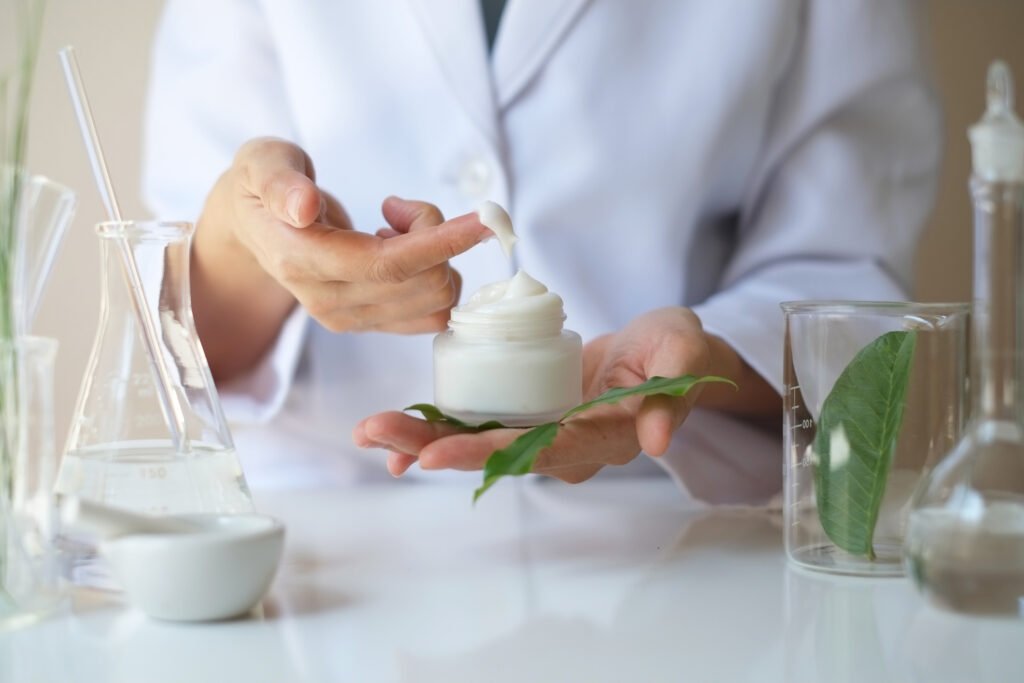
At SW1 Clinic, I recommend pairing prescription-grade topicals with a well-formulated brightening serum containing niacinamide as part of the daily routine — a niacinamide brightening serum from SW1 Shop that complements the clinical programme and supports skin health between treatments.
3. Precision Laser — When and How
Laser treatment for melasma in Asian skin is not straightforward. The wrong laser, at the wrong setting, on the wrong skin type, can worsen pigmentation significantly.
The most reliable laser approach for melasma in Asian skin uses low-fluence picosecond technology — delivering energy in extremely short pulses that break up pigment without generating the heat that triggers PIH. At SW1 Clinic Singapore, the Pigment Eraser treatment uses this approach — calibrated specifically for Asian skin to maximise pigment clearance while minimising inflammation risk.
I do not use laser as a first-line treatment for melasma. I use it as part of a structured programme — after the skin has been prepared with topicals, after SPF habits are established, and with careful monitoring between sessions.
4. Skin Quality and Clarity — The Finishing Layer
Once the active melasma is better controlled, the focus shifts to overall skin quality — the evenness, radiance, and tone that gives skin its healthy appearance.
This is where treatments like Clear Brilliance become valuable. Rather than targeting the pigment itself, Clear Brilliance works on the broader clarity and luminosity of the skin — addressing the residual dullness and uneven texture that often remains even after active pigmentation has faded. In Asian skin, which tends to prioritise skin quality as a core aesthetic value, this step makes a significant visible difference.
The Singapore-Specific Challenges
Managing melasma in Singapore is different from managing it in a cooler, less UV-intense climate. A few realities specific to life here:
Heat matters. Heat itself can trigger melasma, even without direct UV. Standing near a hot stove, sitting in a warm car, exercising outdoors — all of these can worsen pigmentation. Some patients notice flares during Singapore’s hottest months that are unrelated to sun exposure.
Hormonal triggers are ongoing. The oral contraceptive pill, hormone replacement therapy, and pregnancy are all common triggers. In Singapore, where many women remain on hormonal contraception through their thirties and forties, managing the hormonal component of melasma requires an open conversation with your doctor.
Humidity affects product absorption. Singapore’s humidity changes how skincare products absorb and how long sunscreen lasts on the skin. Reapplication is non-negotiable here in a way it might not be in a drier climate.
What I Tell Every Melasma Patient
Melasma is a chronic condition. This is the truth that no one wants to hear, but it is the most important thing to understand before beginning treatment.
This does not mean it cannot be significantly improved. Many of my patients at SW1 Clinic achieve clear, even skin and maintain it — but they do so with discipline: consistent SPF, a well-chosen topical routine, periodic clinic treatments, and an understanding that their melanocytes are permanently sensitised.
The patients who struggle are usually those who expect a cure — three sessions of laser and done. The patients who succeed are those who understand they are managing a condition, not defeating it.
When I explain this honestly, most patients are not disappointed. They are relieved to finally understand why previous treatments seemed to work and then didn’t.
That clarity is where sustainable improvement begins.
Dr Low Chai Ling is the Medical Director of SW1 Clinic Singapore. She specialises in pigmentation management, regenerative aesthetics, and evidence-based skin health for Asian patients.
Follow Dr Low Chai Ling, Founder and Medical Director of SW1 Clinic
LinkedIn · Substack · Instagram · YouTube · TikTok · lowchailing.com
Follow SW1
Instagram: @sw1clinic, @sw1beauty, @sw1spa, @sw1shopsg · Facebook: SW1 Clinic, SW1 Spa · TikTok · YouTube · LinkedIn · Pinterest · Telegram
More from SW1: SW1 Spa blog · SW1 Shop blog